Breaking News
 The fascinating feature of waterlogged fingertips we all share
 The Hidden Dollar Revolution: America's New Digital Money System
 How They "Clunkered" Us
 SpaceX Starship About Nine Days From Next Launch
Top Tech News
 Cab-less truck glider leaps autonomously between road and rail
 Can Tesla DOJO Chips Pass Nvidia GPUs?
 Iron-fortified lumber could be a greener alternative to steel beams
 One man, 856 venom hits, and the path to a universal snakebite cure
 Dr. McCullough reveals cancer-fighting drug Big Pharma hopes you never hear about…
 EXCLUSIVE: Raytheon Whistleblower Who Exposed The Neutrino Earthquake Weapon In Antarctica...
 Doctors Say Injecting Gold Into Eyeballs Could Restore Lost Vision
 Node without Consent
 Dark Matter: An 86-lb, 800-hp EV motor by Koenigsegg
 Spacetop puts a massive multi-window workspace in front of your eyes



Lessons from the 2025 European Power Grid Failure

In late April 2025, Europe experienced a catastrophic power grid failure that left millions without electricity, disrupted critical services, and exposed deep vulnerabilities in one of the world's most advanced energy systems.
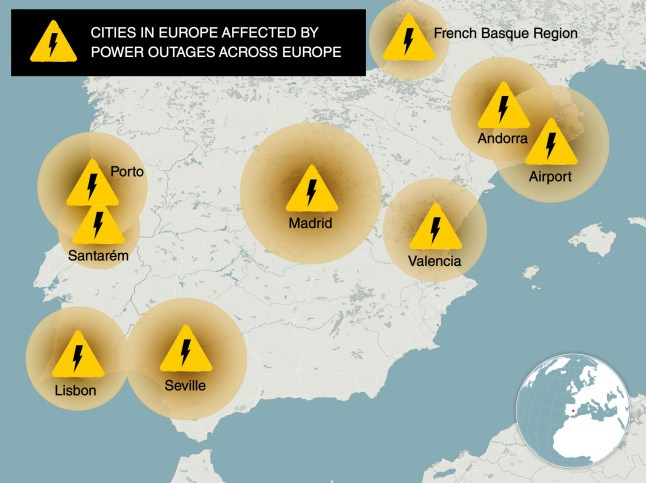
The blackout, which primarily affected Spain, Portugal, and parts of France, Germany, and Italy, was a stark reminder of our dependence on reliable power and the fragility of modern grids.
Let's explore what happened, the major challenges revealed, and practical steps individuals and societies can take to better prepare for such crises.
What Happened: A Snapshot of the 2025 Blackout
On April 28, 2025, at approximately 12:32 CEST, a critical high-voltage interconnector between France and Spain failed, triggering a massive blackout across the Iberian Peninsula and beyond.
Spain lost 15 gigawatts of power—roughly 60% of its demand—while Portugal saw 85 of its 89 power substations go offline.
The outage rippled through parts of France, Germany, and Italy, affecting an estimated 20 million people.