










Breaking News
 TGIF: Immigration and Culture
 The Domino Effect: How a U.S. Attack on Iran Could Unleash Global Catastrophe
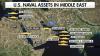 Does It Smell Like Victory?
 The True History of Glyphosate, Derived from Deadly Organophosphate Nerve Agents like Sarin...
Top Tech News
 New Spray-on Powder Instantly Seals Life-Threatening Wounds in Battle or During Disasters
 AI-enhanced stethoscope excels at listening to our hearts
 Flame-treated sunscreen keeps the zinc but cuts the smeary white look
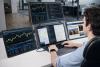 Display hub adds three more screens powered through single USB port
 We Finally Know How Fast The Tesla Semi Will Charge: Very, Very Fast
 Drone-launching underwater drone hitches a ride on ship and sub hulls
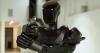 Humanoid Robots Get "Brains" As Dual-Use Fears Mount
 SpaceX Authorized to Increase High Speed Internet Download Speeds 5X Through 2026
 Space AI is the Key to the Technological Singularity
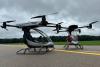 Velocitor X-1 eVTOL could be beating the traffic in just a year



Musk deepens Saudi ties with $3 billion AI deal, raising national security questions
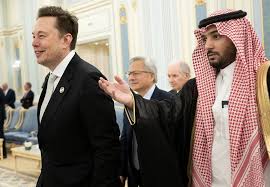
The kingdom's AI champion, HUMAIN, announced it became a "significant minority shareholder" in Musk's xAI just prior to its blockbuster merger with SpaceX. This investment, confirmed on February 18, directly ties Saudi sovereign wealth to one of America's most critical aerospace and defense contractors, raising profound questions about national security, technological sovereignty, and the future geopolitical landscape of AI.
The deal represents the splashiest direct investment yet for HUMAIN, a company created by Crown Prince Mohammed bin Salman last year to advance the kingdom's AI capabilities. According to statements, HUMAIN's $3 billion participation in xAI's Series E funding round has since been converted into shares of SpaceX following the merger of the two Musk companies. This timing could prove exceptionally lucrative, as Musk is reportedly planning an initial public offering for the combined entity later this year.
This financial maneuver is more than a simple investment. It builds upon a pre-existing partnership announced in November at the U.S.-Saudi Investment Forum, where HUMAIN and xAI committed to jointly develop a 500-megawatt AI data center in Saudi Arabia. The plan also includes deploying xAI's Grok chatbot platform within the kingdom. This infrastructure play aims to capitalize on Saudi Arabia's financial resources and cheap electricity to become a global hub for computing power.
A strategic pivot for the kingdom
For Saudi Arabia, this aggressive foray into AI is a core component of Crown Prince Mohammed bin Salman's Vision 2030 plan to diversify the economy away from oil dependence. The kingdom is leveraging its sovereign wealth fund to buy into leading-edge technology and attract infrastructure projects.
The strategy has been aided by U.S. policy. During the Crown Prince's visit to Washington in November, the United States and Saudi Arabia reached an agreement allowing the kingdom to purchase the advanced U.S. semiconductors necessary to power AI data centers. This cooperation during the Trump administration has facilitated the kingdom's rapid entry into the high-stakes arena.
Geopolitical ramifications and competition
The investment grants Saudi Arabia a stake in a pivotal U.S. government contractor. SpaceX is not only the world's largest rocket maker, launching military and intelligence satellites, but also operates Starlink, a satellite internet provider crucial to Ukraine's military communications. This creates a complex scenario where a foreign state, even a strategic partner, holds a significant share in a company integral to American national security.
Furthermore, the deal intensifies a regional AI rivalry with the United Arab Emirates. While Saudi Arabia has now backed xAI, the UAE has struck major deals with OpenAI and its fund, MGX, has also invested in Musk's company. An executive described MGX's strategy as accessing "exquisite opportunities that most people can't access," Bloomberg reported. This competition is fueling a massive build-out of data infrastructure across the Middle East, including new undersea and overland cable projects to improve connectivity.
For Elon Musk, the $3 billion infusion provides substantial capital to escalate his competition against AI giants like OpenAI, Google, and Anthropic. xAI had already raised $20 billion in its Series E round, a war chest intended to ramp up model deployment and infrastructure. Musk has been forging closer ties with Saudi Arabia as he seeks an edge in the AI race.