










Breaking News
 Tulsi Gabbard Resigns, Her Political Career Ruined by Allegiance to Trump
 A guy named nbatman on Reddit accidentally built the most censorship-resistant website...
 Shortages Are Coming
 Doug Casey: "I Think We're at the Edge of the Precipice"
Top Tech News
 Cars Are Fast Becoming Dystopian Prison Pods...
 Our Emergency Water Plan Wasn't Good Enough - So We Built This
 Sodium Ion Batteries Can Reach 100 Gigawatt Per Hour Per Year Scale in 2027
 Juiced Bikes proves capable electric motorcycles don't have to cost a lot
 Headlight projectors turn your car into a drive-in theater
 US To Develop Small Modular Nuclear Reactors For Commercial Shipping
 New York Mandates Kill Switch and Surveillance Software in Your 3D Printer ...
 Cameco Sees As Many As 20 AP1000 Nuclear Reactors On The Horizon
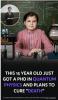 His grandparents had heart disease.
At 11, Laurent Simons decided he wanted to fight aging.
His grandparents had heart disease.
At 11, Laurent Simons decided he wanted to fight aging.
 Mayo Clinic's AI Can Detect Pancreatic Cancer up to 3 Years Before Diagnosis–When Treatment...



Shortages Are Coming

79 days ago, the Strait of Hormuz closed.
11 million barrels a day stopped moving. The IEA called it the largest supply disruption in the history of the global oil market. Gasoline is $4.53 nationally. Diesel is $5.65. You already know that part.
What you don't know yet is what comes next.
This isn't an oil story. It's a cascade. Every refinery that processes crude produces sulphur as a byproduct. That sulphur becomes sulphuric acid. That acid grows your food, mines your copper, and starts your car. The Middle East supplies 24% of global sulphur. Half of seaborne trade moved through Hormuz.
It stopped moving 78 days ago.
The shortages that are coming aren't priced in.
The Chemical Nobody Is Talking About
Sulphuric acid is the most produced industrial chemical on earth. It's used in fertilizers, copper mining, semiconductor manufacturing, uranium extraction, lead-acid batteries, EV battery production and so much more.
About 50% of seaborne sulphur trade transited the Strait of Hormuz. In March, global sulphur loadings on dry bulk carriers collapsed 31% in a single month. Persian Gulf exports fell 66%.
Then on May 1, China, the world's largest sulphuric acid exporter, banned exports entirely to protect its own farmers. Three million annualized tonnes pulled from global markets overnight. Japan, South Korea, and India combined have 500,000 tonnes of spare export capacity. That's one-sixth of the gap.
The result: sulphuric acid CFR US Gulf went from $155/mt to $400/mt in ten weeks. A 158% increase. Sulphur is up 95% since February 28 — a bigger move than oil itself.
Here's why that matters for everything downstream.
Metals vs. Food: A War for Acid
Fifty-five to sixty percent of all sulphuric acid goes to fertilizer production. The rest goes to mining: leaching copper, processing nickel, extracting uranium, refining rare earths. When supply collapses, those two sectors fight over what's left.
Governments will be the ones to decide: Does the remaining supply go to food or to industry? Normally food would be the obvious choice. But, in a time of war will that decision change?
The supply constraints for mining are already showing up in the numbers. Chile, the world's largest copper producer, imported 151,000 tonnes of sulphuric acid from China in March 2025. February 2026: 32,000 tonnes. March 2026: zero. About 20% of global refined copper production depends on acid-leach operations. That's a physical availability problem, not a price problem.
Kazatomprom — 40% of global uranium supply — has already cut 2026 guidance by 10% citing sulphuric acid shortages for in-situ recovery. One of their major joint ventures was cut from 6,000 to 3,750 tonnes for the year. Their replacement acid plant isn't online until late 2026 at the earliest.
In Indonesian nickel, the feedstock for EV batteries, they need 25–30 tonnes of sulphuric acid per tonne of product. Huayou has already idled 50% of capacity. Indonesia sourced 75–80% of its sulphur from the Middle East last year.