










Breaking News
 Iran's mountain shelters offer Taiwan a China survival playbook
 Exposing the True Evils of the Uniparty: Soros Money, Surveillance, and the Rise of a Third Party
 18,000+ Kids Injected With Vaccines While Unconscious At Colorado Hospital
 58% Of Americans Get Their News From Four Left-Leaning Aggregators; Study Finds
Top Tech News
 Modular phone promises total privacy at the flick of a switch
 Genetically Engineered War Dogs for 134 Pound Cyborg Dire Wolves Now – Later 600 Pound Wolves
 They're Quietly REPLACING Our Food With THIS… And Nobody Is Talking About It!
 Chicago Opens First "Teacher-Free" AI School as Global Push Accelerates
 Solar Panels Are Doing Something Nobody Expected
 DeLorean climbs skyward to race electric flying cars
 Atari's 800XL returns with a keyboard, cartridges and BASIC
 Bioinspired robot airdrops into remote waters via morphing wing-sail
 Anduril interceptor adapts to emerging threats via swappable stages
 I Built a Website to Expose Solar and Battery Scams



100% solar-powered super villa makes Arab housing sustainable again
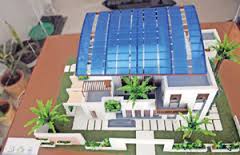
After oil ushered in an era of excess, many people in the Middle East stopped building sensible homes adapted to harsh weather conditions. But a group of students from Oman are bridging the distance with a sustainable design with which even the most traditional Arab can identify. Here's the thing: many homes in the Gulf region in particular have separate quarters for men and women (who aren't a part of the family), making them rather large. Whether or not westerners agree with this, it's a fact of life here - so the Higher College of Technology found a brilliant way to satisfy this requirement while slashing the home's overall footprint by roughly two thirds. Then they added a slew of other sustainable features and a crown of solar panels, resulting in a super villa that is 100 percent powered by the sun and generates three times the energy it needs to run.