










Breaking News
 Something Is VERY WRONG With Silver
 What The Hell Is Going On With Beef? | Brooke Rollins #505 | The Way I Heard It
 WARNING: U.S. Mint Is SUSPENDING Silver Dealers
 Trump Just Admitted Unthinkable Dollar Reset (Most Don't Understand the Plan)
Top Tech News
 Most artificial limbs rely on silicone or plastic to mimic human hands.
 Flying cell tower beams phone signal to Japan from 10 miles up
 Chinese Commercial Reactor Achieves Nuclear Fusion with Clean Hydrogen-Boron Fuel
 Med Beds Just Took a MASSIVE Step Forward, Healing People in Days!
 Palmer Luckey: Autonomous Weapons Are Ancient and Why Anduril Won't Build Humanoids | EP #295
 A laser just photographed objects through six feet of concrete
 Elon Musk's Next-Gen Motor Destroy Entire EV Industry
 China's disputed satellite refueling heralds new space war era
 BYD Will Put Solid-State Batteries In An EV Next Year: Executive
 FDA-cleared exoskeleton puts spinal-cord patients back on their feet



Ship Operators Explore Autonomous Sailing
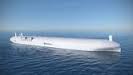
"All hands on deck" may become a thing of the past.
Ship designers, their operators and regulators are gearing up for a future in which cargo vessels sail the oceans with minimal or even no crew. Advances in automation and ample bandwidth even far offshore could herald the biggest change in shipping since diesel engines replaced steam.
Ship operators believe more automation will enable them to optimize ship use, including cutting fuel consumption. "The benefit of automation is as an enabler of further efficiency across the 630 vessels we operate," said Palle Laursen, head of Maersk Line Ship Management, a unit of cargo-ship giant A.P. Moeller-Maersk A/S.
British engine maker Rolls-Royce Holdings PLC is leading the Advanced Autonomous Waterborne Applications initiative involving other companies and universities. It foresees technologies long used to improve commercial airline operations migrating to ships. The group also is tapping know-how from those working on driverless cars to adapt for safe at-sea autonomous operations.
A future unmanned ship could resemble some of the most advanced combat drones. It would sport infrared detectors, high-resolution cameras and laser sensors to monitor its surroundings. The vast troves of data would be transmitted to command centers where staff do little more than monitor progress and ensure ships are operating at optimum speeds.
The consortium completed a study this year that concluded such vessels are feasible and offer savings.
Oskar Levander, vice president for innovation at Rolls-Royce's marine unit, said moving toward greater autonomy and unmanned shipping could cut transport costs 22%. The bulk would come from lower staff costs, though such vessels also would be more fuel efficient by eliminating the need to carry equipment to support people onboard.
The first steps already are being taken. The Stella ferry, used in the Baltic and operated by Finferries, has been equipped with a variety of sensors including lasers and thermal cameras to assess whether such sensors could allow autonomous operations.
A critical step toward floating remotely controlled unmanned cargo ships on the oceans by 2030, and autonomous ones by 2035, is the ability to pass large amounts of data from ship to shore to ensure safe operations. For years, lack of affordable bandwidth has made that a challenge. A new generation of communications satellites is promising lower costs to transfer data.
Satellite-services company Inmarsat PLC this year launched its Fleet Xpress service to provide improved connectivity to ship operators. It combines high-bandwidth satellites with a more secure connection to guarantee vital safety connectivity. Ronald Spithout, president of Inmarsat's maritime business, said the connection will let operators monitor engine and other ship functions more closely to enable enhanced automation.
Rolls-Royce, no longer affiliated with the luxury car maker, is betting that a push to smarter vessels will lift the fortunes of its struggling marine business. The prolonged slump in crude prices has led to a sharp drop in demand for sophisticated offshore vessels. Marine sales at Rolls-Royce fell 23% last year after declining 16% the prior year when oil prices started to slump.