










Breaking News
 Dangerous Cosmetics Alert: Why Stearalkonium Chloride and Synthetic Colors Are Chemtrails...
 Anthropic Researcher Quits AI Industry, Citing Fears of Uncontrollable Systems
 U.S. Mint Commemorates 9/11 Anniversary with New Half Dollar Coin Declaring: NEVER FORGET
 Watch: Convention Crowd Symbolically Anoints JD Vance for 2028 with Chant
Top Tech News
 Freezable titanium plate keeps your cooler chilled way longer than ice packs
 Review: Affordable thermal device is made for discovering life outdoors
 AI Whistleblower Tells Tucker How AI Could Kill All Humans by 2040
 You Hate Flock? Well There's More...
 Will Spiking Diesel Prices Drive Autonomous Trucking?
 Chinese Concept Video Imagines the Future of Warfare
 OPTIMUS CONFIRMED: 15,000 Bots This Year -- Tesla to $3,000
 What is Going On With Robotaxi and Cybercab? Here Are All the Answers
 Floating data center would provide water and electricity to 32,000 homes
 OpenAI Cuts Off Elon's Cursor, Humanity's First Star Probe, and Trump's Nuclear Mars Shi



goTenna makes a Mesh of off-grid comms
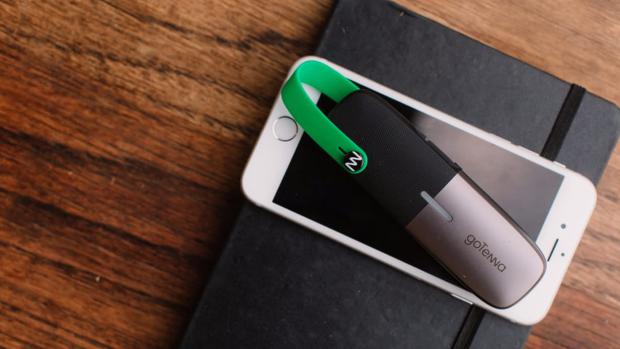
The original goTenna consists of a small radio antenna that connects to a user's smartphone via Bluetooth and an accompanying app for Android and iOS. The app allows users to send private text messages, public broadcast text messages and GPS data to other users. The distance over which this can be done varies, but when New Atlas put two of the devices through their paces in the Rockies earlier this year, we found we were able to stay in touch from over 2 mi (3.2 km) apart.
Those first-gen goTenna devices are such that communications are sent directly from one device to another, but this means that they must be within range of each other. The goTenna Mesh is able to relay communications via other goTenna Mesh devices, thereby increasing the potential range and allowing communications to be delivered between devices even if they are not within range of each other.
goTenna says the Mesh uses "military-grade mesh networking" to double or triple the range of the original device from around 1 mi (1.6 km) in built-up places to around 3 mi (4.8 km) in open terrain, with the network getting stronger with more users. The device automatically selects clear public radio frequencies over which to send communications. Despite this, and the fact that the devices of other users are used as as relay nodes, the firm says communications remain secure by way of end-to-end encryption.