










Breaking News
 This is the future we shall bring into being
 Elon Musk's Vision For The Future Looks Like A Movie
 Phosphorus Munitions Fired by Israel Burn Groves, Orchards in Southern Lebanon
 Iran's IRGC Warns It Will Expand 'Geography of the War' If the US Attacks Again
Top Tech News
 BEYOND THE MOON: NASA plans a nuclear-powered fleet to push DEEPER into space
 Big Oil Backs Mazama's $135 Million Bet On Superhot Geothermal
 Quantum compass takes flight on Northrop's Lumberjack drone
 Terrifying AI Behavior Even Its Creators Couldn't Explain
 WW3 Near-Miss? AI Hallucinated Nuclear Weapons Components Aboard Chinese Vessel Bound For Iran
 Stripe Is Building the Toll Road for the Machine Economy
 Toyota Dakar hopeful swaps twin-turbo V6 for hydrogen fuel cells
 4-min turbo-inflatable cubic camp castle is now available in the USA
 Researchers Used Claude To Hack OpenAI Employee Accounts
 Chinese Scientists Develop New Oil Refining Method That Cuts Energy Use by 90%



Robocop Rising: Police Love Knightscope's New Crime-Fighting Robots
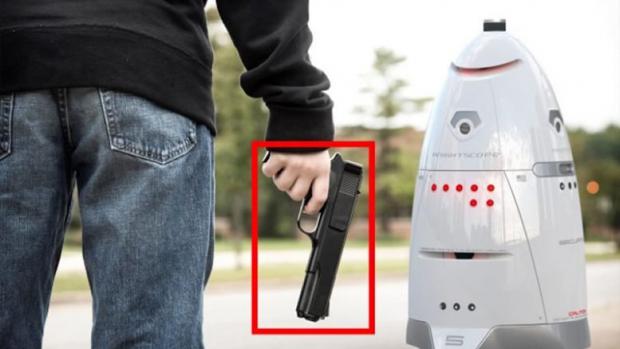
Maybe someday it will menacingly order citizens to drop their weapons — or else — a la Robocop.
But for now, the Knightscope crime-fighting robots, demonstrated for the University of Texas at Arlington Police Department and the media on Thursday, are limited to less aggressive tasks like scanning license plates for unauthorized vehicles or alerting authorities to people in restricted areas.
Or, for mall bots, telling shoppers how to get to Macy's. And they're always videotaping and collecting data, including markers that help identify nearby wireless devices. Those latter skills helped solve a robbery recently, said Knightscope co-founder and former UTA student Stacy Stephens
But he has much higher expectations for the technology.
"Long-term, our ultimate goal is to be able to predict and prevent crime," he said, by analyzing past data with real-time, on-site information collected by the robots. "Then maybe we have the ability to put the robots into a patrol state where they are hitting those hotspots."