










Breaking News
 Why We're Being Censored on Substack, Why We're Leaving Substack, and Why YOU Should Too!
 WATCH LIVE: Trump addresses 2026 United Nations General Assembly
 The current decline in US bonds is unprecedented:
 The article is getting a lot of attention.
Top Tech News
 BEYOND THE MOON: NASA plans a nuclear-powered fleet to push DEEPER into space
 Big Oil Backs Mazama's $135 Million Bet On Superhot Geothermal
 Quantum compass takes flight on Northrop's Lumberjack drone
 Terrifying AI Behavior Even Its Creators Couldn't Explain
 WW3 Near-Miss? AI Hallucinated Nuclear Weapons Components Aboard Chinese Vessel Bound For Iran
 Stripe Is Building the Toll Road for the Machine Economy
 Toyota Dakar hopeful swaps twin-turbo V6 for hydrogen fuel cells
 4-min turbo-inflatable cubic camp castle is now available in the USA
 Researchers Used Claude To Hack OpenAI Employee Accounts
 Chinese Scientists Develop New Oil Refining Method That Cuts Energy Use by 90%



Russia Claims It Now Has Lasers To Shoot Satellites
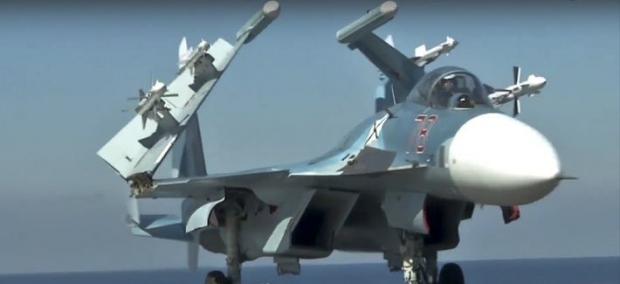
Russian defense companies have created a plane-mounted laser that can hit satellites — at least according to an anonymous source quoted by Russian news agency Interfax. On Saturday, an Interfax report cited the source as saying that weapons maker Almaz-Antey has "completed work on the anti-satellite complex," which includes the laser and associated ground control gear.
Independent and Western observers have not yet verified the claim. But the Russian program does exist. Last April, Almaz-Antey general designer Pavel Sozinov told Russian news agency Ria Novosti that Russian leadership had ordered the company to develop weapons that could interfere electronically with or achieve "direct functional destruction of those elements deployed in orbit."
The program builds off the Soviet-era Beriev A-60, a gas laser fitted inside a heavily modified Ilyushin Il-76MD cargo plane. The effort also bears some resemblance to the Soviets' 1984 Kontakt 30P6 program, which sought to modify a MiG-31D to draw targeting data from the Krona-N space and satellite observation complex and shoot down an enemy satellite with a 79M6 Kontakt missile.