










Breaking News
 FT: Saudis Quit mBridge as BRICS Start to Fray
 Grand Theft World Podcast 305 | The Responders with guests John Kirby
 Bombshell just dropped...
  War Watch: The Storm Cone
Top Tech News
 BEYOND THE MOON: NASA plans a nuclear-powered fleet to push DEEPER into space
 Big Oil Backs Mazama's $135 Million Bet On Superhot Geothermal
 Quantum compass takes flight on Northrop's Lumberjack drone
 Terrifying AI Behavior Even Its Creators Couldn't Explain
 WW3 Near-Miss? AI Hallucinated Nuclear Weapons Components Aboard Chinese Vessel Bound For Iran
 Stripe Is Building the Toll Road for the Machine Economy
 Toyota Dakar hopeful swaps twin-turbo V6 for hydrogen fuel cells
 4-min turbo-inflatable cubic camp castle is now available in the USA
 Researchers Used Claude To Hack OpenAI Employee Accounts
 Chinese Scientists Develop New Oil Refining Method That Cuts Energy Use by 90%



Two surgeons in China developing a method to transplant a human head
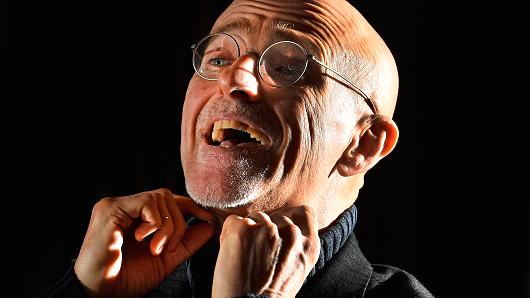
Canavero and Ren recently performed a trial run on two cadavers, prompting outrage from the medical community, which has declared human head transplantation "fake news." An examination by a team of independent scientists published this month, however, suggests that, while fantastical seeming, the scientific and medical advancements necessary for human head transplantation are rapidly approaching plausibility. Nevertheless, major ethical and moral hurdles remain.
Canavero has been talking up his plan for human head transplantation in TED talks and the media for decades, despite producing little in the way of scientific evidence, going so far as to announce in 2015 that he would perform surgery on a human volunteer — a young man with Werdnig-Hoffman disease, a degenerative disease where the muscles waste away — by 2017. The volunteer backed out, and the surgery still hasn't been done on a living human, but Canavero maintains that it is "imminent."