










Breaking News
 Amazon Boeing Plane Bursts Into Flames After it Overshoots Runway at Miami International Airpot
 Trump grants clemency to 30 people, White House pardon czar says
 Bessent: "CUT THE SNAKE'S HEAD OFF"--But Who is the Real Target?
 Special LIVE Saturday Show: Could The Gov Seize XRP After Chilling FDIC Admission? Gas Prices...
Top Tech News
 Floating data center would provide water and electricity to 32,000 homes
 OpenAI Cuts Off Elon's Cursor, Humanity's First Star Probe, and Trump's Nuclear Mars Shi
 Eating pollution? Plastic-to-cookie technology raises safety, environmental concerns
 Ford's $30,000 Fathom EV Truck Appears More Conventional Than Expected
 Berlin-based artist Simon Weckert explored that idea with Digital Camouflage...
 Tether expands tokenization business into Saudi Arabia, starting with real estate
 Ukraine is facing a new problem in its war with Russia:
 It charges more than it discharges while driving
 Dataminr AI tech to go live on NATO Maven system: CEO
  The Most Dangerous Interview Ever Recorded? PART 2


Plans for Regional Hydrogen-Electric Passenger Aircraft
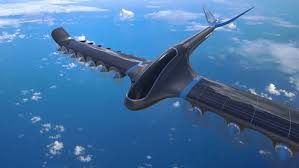
Element One merges HES' ultra-light hydrogen fuel cell technologies with a distributed electric aircraft propulsion design. With virtually no change to its current drone-scale systems, HES' distributed system allows for modularity and increased safety through multiple system redundancies.
Element One is designed to fly 4 passengers for 500 km to 5000 km depending on whether hydrogen is stored in gaseous or liquid form. This performance is several orders of magnitude better than any battery-electric aircraft attempt so far, opening new aerial routes between smaller towns and rural areas using an existing and dense network of small-scale airports and aerodromes.
Refueling Element One will take no more than 10 minutes using an automated nacelle swap system that applies AGVs and automated warehouse operations such as those used by Amazon and Alibaba.