










Breaking News
 The $50/SqFt House: Why People Are Building Quonset Homes
 Man Builds a Root Cellar With a Greenhouse on Top | Start to Finish by @puremichiganliving9952
 They Will Turn Your Money Off! Incoming Stablecoins More Dangerous Than CBDCs - Fitts
 10 Delicious Ways to Preserve Tomatoes
Top Tech News
 NASA Super Light Solar Sail Project Will Be 12-40 Times Lighter and Faster
 Space Telescope Interferometer to Image Exoplanet Continents
 Twenty-five years of "temporary": how 9/11 built a surveillance state Americans never vote
 I'll Never Buy Another WALMART Battery!
 Shoei GT-Air 3 Smart helmet drops with built-in AR for $1,500
 Freezable titanium plate keeps your cooler chilled way longer than ice packs
 Review: Affordable thermal device is made for discovering life outdoors
 AI Whistleblower Tells Tucker How AI Could Kill All Humans by 2040
 You Hate Flock? Well There's More...
 Will Spiking Diesel Prices Drive Autonomous Trucking?



Mind Reading Computers Directly Convert Brain Signals into Speech
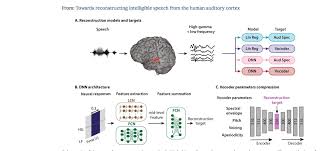
Devices monitor brain activity and Artificial Intelligence reconstructs the words a person hears. This breakthrough harnesses the power of speech synthesizers and artificial intelligence. It could lead to new ways for computers to communicate directly with the brain.
People with amyotrophic lateral sclerosis (ALS) or recovering from stroke could regain their ability to communicate with the outside world.
They plan to test more complicated words and sentences next, and they want to run the same tests on brain signals emitted when a person speaks or imagines speaking. Ultimately, they hope their system could be part of an implant, similar to those worn by some epilepsy patients, that translates the wearer's thoughts directly into words.