










Breaking News
 The AI Bird-Flu Scenario They Just Published
 Japan's first robot ambulance works the 9-1-1 lines for humanoids
 Cheap smartphone add-on pinpoints hidden cameras to shut down spies
 The $600 Tank That Beats a $10,000 Powerwall
Top Tech News
 Terrifying AI Behavior Even Its Creators Couldn't Explain
 WW3 Near-Miss? AI Hallucinated Nuclear Weapons Components Aboard Chinese Vessel Bound For Iran
 Stripe Is Building the Toll Road for the Machine Economy
 Toyota Dakar hopeful swaps twin-turbo V6 for hydrogen fuel cells
 4-min turbo-inflatable cubic camp castle is now available in the USA
 Researchers Used Claude To Hack OpenAI Employee Accounts
 Chinese Scientists Develop New Oil Refining Method That Cuts Energy Use by 90%
 World's smallest CT scanner fits in the palm of your hand
 The Tesla Roadster will blow people's minds
 Peter Thiel-Funded Company Anduril to Triple the Number of Autonomous Surveillance Towers...



Samsung Unveils Foldable Phone with Shocking Price Tag
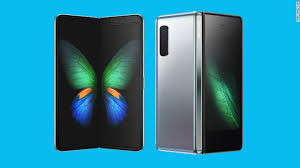
Before Samsung's big event today, just about anyone who's been paying even a little attention knew that it was planning to announce its foldable smartphone.
As expected, the company revealed a device aptly named the Galaxy Fold. It pretty much matched up with all of the rumors, right down to the size of the displays.
Galaxy Fold Details
The Galaxy Fold is one part phone, one part tablet, all parts expensive. The device is scheduled to release with a staggering price of $1,980.
It comes with two separate screens—a smaller 4.6-inch AMOLED secondary display and a much larger 7.3-inch Infinity Flex AMOLED screen that will be revealed when the device is unfolded. Once you're in the 7-inch plus size, you're bordering on a device that's closer to a tablet than a phone. However, the foldable design here makes this more portable than your average tablet.
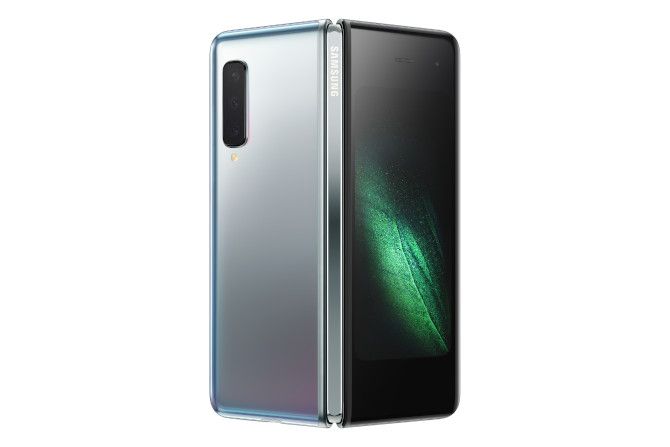
The 4.6-inch screen comes with a 21:9 aspect ratio with a resolution of 840 x 1,960. The larger screen features a resolution of 1,536 x 2,152. Both have the same pixel density of 420 dpi, which should make for some extremely sharp images whether on the big or small screen.
Durability is obviously a concern with a device like this being the first of its kind. Samsung claims that the device has been tested to withstand 200,000 folds. That should equate to around five years of usage with 100 folds a day.
Interestingly, Samsung didn't announce much about the processor only saying that it's a "7nm 64-bit octa-core processor." The company did announce that the device would feature 512GB of UFS 3.0 storage space.