










Breaking News
 The Deep State's Get-Out-Of-Jail-Free Card
Why Not Stop Mass Immigration into the United States?
 French President Macron's Popularity Falls to Record Low of 16 Per Cent
 Top Signs You're Heading for a Quagmire
Top Tech News
 NASA Super Light Solar Sail Project Will Be 12-40 Times Lighter and Faster
 Space Telescope Interferometer to Image Exoplanet Continents
 Twenty-five years of "temporary": how 9/11 built a surveillance state Americans never vote
 I'll Never Buy Another WALMART Battery!
 Shoei GT-Air 3 Smart helmet drops with built-in AR for $1,500
 Freezable titanium plate keeps your cooler chilled way longer than ice packs
 Review: Affordable thermal device is made for discovering life outdoors
 AI Whistleblower Tells Tucker How AI Could Kill All Humans by 2040
 You Hate Flock? Well There's More...
 Will Spiking Diesel Prices Drive Autonomous Trucking?



Facebook-backed brain research decodes thoughts as words instantly for the first time
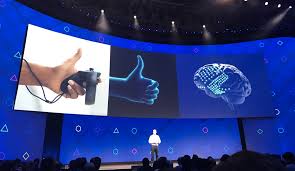
A perfect demonstration of this is a research partnership between scientists at the University of California San Francisco, who want to help disabled patients speak again, and Facebook, which is pursuing technologies that would allow the general population to type words with their mind. This collaboration has now produced an exciting breakthrough, demonstrating technology that for the first time, decodes brainwaves as words and phrases in real time.
For healthy people (and for better or for worse), there isn't a huge leap between the thoughts we'd like to share and the words that come out of our mouths. But it is a very different story for people who have suffered a stroke, a spinal cord injury or a brain disease that can impede their ability to speak.