










Breaking News
 "Begin Preparing Yourself..." - Jeffrey Sachs
 The 5-Year Treasury Just Broke 5%... The Whole Curve Is Next
 ICE Denounced for Enacting 'Official Government Policy of Disappearing People'
 Google Just Told Canadian Adults: Give Us Your ID and a Selfie Or Else…And It's Starting Now!!
Top Tech News
 Tesla Model 3 killer charges from 10 to 97% in just 9 minutes
 World-first unpowered DNA computer sets speed record
 I Power 5 Buildings Off-Grid. Here's How
 The US government is pushing hard to get a working nuclear fission reactor into space by late 2028
 SpaceX Starmind AI in Space Radiator
 China Will Dominate Global Nuclear Energy Through 2035, Analyst Says
 These Absolutely Wild-Looking EVs Are Saudi Arabia's First Homegrown Cars
 BEYOND THE MOON: NASA plans a nuclear-powered fleet to push DEEPER into space
 Big Oil Backs Mazama's $135 Million Bet On Superhot Geothermal
 Quantum compass takes flight on Northrop's Lumberjack drone


Amazon Orders 100,000 Electric Delivery Trucks From Rivian
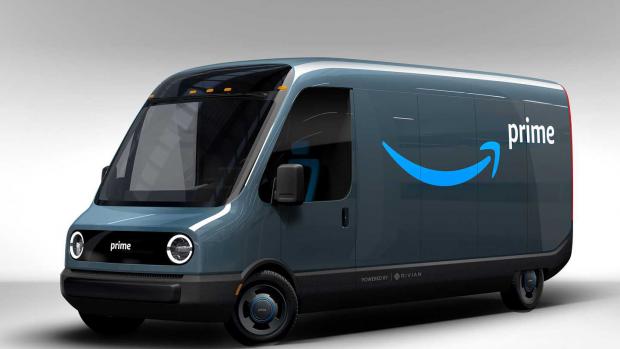
Now, Amazon wants to make sure Rivian will have lots of cars to build. Actually, more than 100,000 right away. But not necessarily the ones we already know. Amazon wants 100,000 electric delivery trucks. Did you even know Rivian was developing these products?
Dave Clark, Amazon's SVP (Senior Vice President) of Worldwide Operations & Customer Service, tweeted the company ordered that many vehicles from Rivian, as you can see below:
"Our fleet is Electrifying! Thrilled to announce the order of 100,000 electric delivery vehicles – the largest order of electric delivery vehicles ever. Look out for the new vans starting in 2021."
The new electric delivery trucks will appear in 2021. Not a very long waiting time, if you consider the company will just start producing the R1T and the R1S in 2020.
The vehicles are part of a commitment Amazon has made to The Climate Pledge. This agreement demands the ones that sign it to make all possible efforts to go carbon neutral by 2040, ten years earlier than the Paris Accord determines.
Amazon says the 100,000 electric delivery trucks order is the largest ever for this sort of vehicle. The company wants to have 10,000 of them on the streets by 2022. Rivian will have to deliver the other 90,000 units by 2030.