










Breaking News
 Spokane Fire: Prepping Our Equipment to Head Out
 80x Bigger Than Enron: $5.1 Trillion Fraud That Can Collapse Treasuries, Spark Civil War
 Amish community fined nearly $500,000 for failing to download ArriveCan app
 Iran Issues Six Demands on the US to Re-Open the Strait
Top Tech News
 What could possibly go wrong? Scientists use AI to design new viruses
 Dual-motor suitcase drive underpins 3,000-hp hypercar
 DoorDash Wins Federal Approval To Fly Its Own Delivery Drones
 Shade-Resistant Solar Cells Retain 97% Efficiency After 2,000 Hours of Testing
 20 Ancient Engineering SECRETS
 Stonehenge Was Reanalyzed by AI -- And the Findings Are Hard to Explain
 After Years Of Delays, Aptera Is Finally Preparing To Build Customer Cars
 'When you kill it, it doesn't die': the jellyfish that has cracked the secret of immorta
 Archer Aviation debuts Halo autonomous VTOL, Thunder's commercial twin
 US Telecoms Slide On Starlink Mobile Threat; Bernstein Sees It As A "Jab, But No Knockout Yet**



Veteran Goes From Janitor to Physicist After Teaching Himself Trigonometry Using Only Youtube Videos
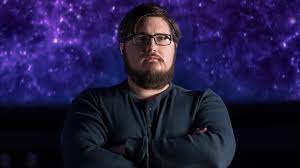
This US Army veteran is a perfect example of how anyone can achieve their dreams—regardless of their experiences.
Joshua Carroll had only been in high school when an airplane crashed into the World Trade Center back in 2001. Rather than pursue a college education, Carroll got his GED so he could enlist in the military.
After spending three deployments in Iraq, Carroll returned to his home in Virginia and found himself suffering from PTSD—and a general lack of purpose.
Carroll had begun working as a janitor at a local school when he caught sight of a Stephen Hawking book sitting on a library shelf. As he flipped through the pages, Carroll suddenly decided to pursue his childhood dream of being a physicist.
With just a 10th grade education in geometry, Carroll managed to persuade the admissions staffers at Radford University to let him skip the prerequisites for the physics program provided he could teach himself trigonometry.
Armed with nothing but the internet, Carroll prepared for his entrance exam by watching dozens of YouTube videos to learn advanced mathematics in just three weeks.
Not only did he pass with flying colors, he graduated as one of the top students in his class—and he has been working as a physicist ever since.