










Breaking News
 The TERRIFYING Reason Peter Thiel Escaped the US
 Professor Jiang Breaks Down the Greater Israel Project
 Edward Snowden on Palestine and Sam Altman
 Palantir. IT'S WORSE Than You Think
Top Tech News
 Solar Panels Are Doing Something Nobody Expected
 DeLorean climbs skyward to race electric flying cars
 Atari's 800XL returns with a keyboard, cartridges and BASIC
 Bioinspired robot airdrops into remote waters via morphing wing-sail
 Anduril interceptor adapts to emerging threats via swappable stages
 I Built a Website to Expose Solar and Battery Scams
 Whistleblower Issues Dire Warning: Rogue AI, Hacking Nuclear Programs...
 Multi-material insulation delivers up to 10,000 x the stiffness
 Anduril's plan to save US sub edge from China's undersea surge
 Researchers Develop AI 'Mind-Reading' Tool That Reconstructs What Your Eyes See



Mixed up membrane desalinates water with 99.99 percent efficiency
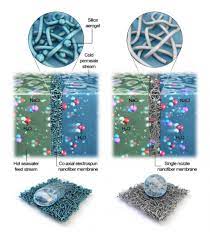
Desalination could be a vital technology to meet the world's drinking water needs, and now Korean engineers have developed a new nanofiber membrane that can operate efficiently for long periods.There are a few different ways to desalinate water, but this study focuses on membrane distillation. In this process, the salty brine on one side of the membrane is heated, while the fresh water on the other side remains cold. The membrane is hydrophobic to repel the liquid water, but water vapor from the hot side can still pass through the pores. Due to a vapor pressure difference it drifts over to the cold side, where it recondenses as fresh water.