










Breaking News
 The TERRIFYING Reason Peter Thiel Escaped the US
 Professor Jiang Breaks Down the Greater Israel Project
 Edward Snowden on Palestine and Sam Altman
 Palantir. IT'S WORSE Than You Think
Top Tech News
 Solar Panels Are Doing Something Nobody Expected
 DeLorean climbs skyward to race electric flying cars
 Atari's 800XL returns with a keyboard, cartridges and BASIC
 Bioinspired robot airdrops into remote waters via morphing wing-sail
 Anduril interceptor adapts to emerging threats via swappable stages
 I Built a Website to Expose Solar and Battery Scams
 Whistleblower Issues Dire Warning: Rogue AI, Hacking Nuclear Programs...
 Multi-material insulation delivers up to 10,000 x the stiffness
 Anduril's plan to save US sub edge from China's undersea surge
 Researchers Develop AI 'Mind-Reading' Tool That Reconstructs What Your Eyes See



Off-Grid Medicine Kit – How To Make Your Own Tea Tree Oil
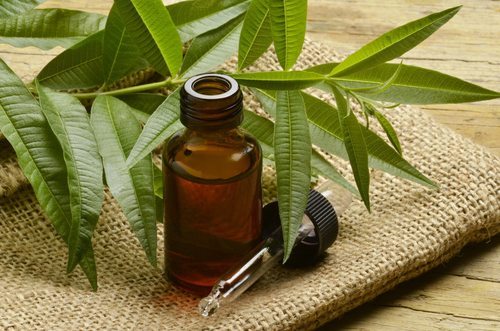
A homesteading, off-the-grid, or prepping family should keep at least 24 bottles of essential oil on hand for every three members of the family or group. Tea tree oil is a must for every bug out bag and first aid kit.
Making vs. Buying
Melaleuca alternifolia trees (a.k.a. "tea trees") grow mostly in Australia, which limits access to raw leaves for many. Fortunately, you can also buy the leaves wholesale. Either way, the steam distillation process must be used to create this essential oil. The essential oil contains 48 natural compounds and no one can reproduce it synthetically. Effective grades of tea tree oil can typically be purchased for around $5 to $7 per bottle, either online or at a local store.
How to Make Tea Tree Oil
If you have a source of leaves, use the following directions to make the oil.
Place tea tree leaves in a pot and pour in only enough water to cover the leaves. Put a vegetable steamer into the pot over the top of the leaves and water.
Place a measuring cup inside the vegetable steamer.
Place the lid on the pot upside down so that the handle nub in the center is pointing towards the measuring cup.
Turn the stove on high to boil the water and steam the leaves. The water will soon begin to condense and evaporate. The condensation will slide towards the handle and into the measuring cup.