










Breaking News
 When Corporations Resist the State: Ethics, AI, and the Limits of Government Power
 The #1 Best Potassium Food on Earth (It's Not Bananas)
 ONE WEEK TO ARMAGEDDON?
 America Dependent On Chinese Electrical Parts For AI Build-Out
Top Tech News
 DARPA O-Circuit program wants drones that can smell danger...
 Practical Smell-O-Vision could soon be coming to a VR headset near you
 ICYMI - RAI introduces its new prototype "Roadrunner," a 33 lb bipedal wheeled robot.
 Pulsar Fusion Ignites Plasma in Nuclear Rocket Test
 Details of the NASA Moonbase Plans Include a Fifteen Ton Lunar Rover
 THIS is the Biggest Thing Since CGI
 BACK TO THE MOON: Crewed Lunar Mission Artemis II Confirmed for Wednesday...
 The Secret Spy Tech Inside Every Credit Card
 Red light therapy boosts retinal health in early macular degeneration
 Hydrogen-powered business jet edges closer to certification


The Great Cholesterol Scam and The Dangers of Statins
Story at a Glance:
•There is a widespread belief that elevated cholesterol is the "cause" of cardiovascular disease. However, a large body of evidence shows that there is no association between the two and that lower cholesterol significantly increases one's risk of death.
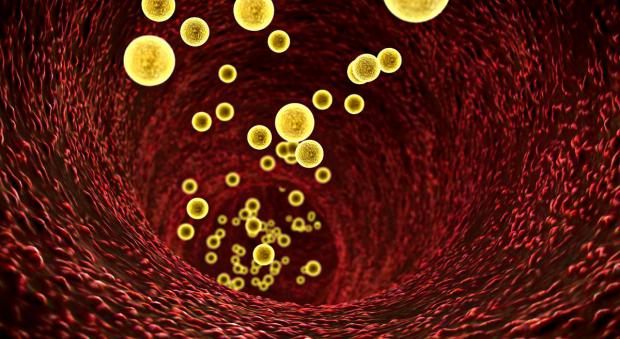
•An alternative model (which the medical industry buried) proposes that the blood clots the body uses to heal arterial damage, once healed, create the characteristic atherosclerotic lesions associated with heart disease. The evidence for this model, in turn, is much stronger than the cholesterol hypothesis and provides many important insights for treating heart disease.
•The primary approach to treating heart disease is to prescribe cholesterol lowering statin drugs (to the point, over a trillion dollars have now been spent on them). Unfortunately, the benefits of these highly toxic drugs are minuscule (e.g., at best taking them for years extends your life by a few days) and the harms are vast (statins are one of the most common pharmaceuticals that severely injure patients).
•In this article we will explore the specific injuries caused by statin drugs, the forgotten causes of cardiovascular disease, and our preferred treatments for heart and vascular diseases.
The more I study science, the more I come to see how often fundamental facts end up being changed so that a profitable industry can be created. In the case of heart disease, I very much believe that is the case and in this publication, I've tried to expose the erroneous information that predominates our understanding of this subject (e.g., previously I've discussed why our model of how the heart pumps blood in the body is incorrect and in an article that will be released in a few weeks, I will detail the major misconceptions about blood pressure management).