










Breaking News
 Rising Prices and Falling Values--Inflation and Social Decay
 The non-Zionist Israeli Population Could Save the Day
 AfD Launches 'Knife App' As Berlin Violence Surges
 Oil Prices EXPLODE After Trump Signals That US Is Moving To Wartime Economy
Top Tech News
 DARPA O-Circuit program wants drones that can smell danger...
 Practical Smell-O-Vision could soon be coming to a VR headset near you
 ICYMI - RAI introduces its new prototype "Roadrunner," a 33 lb bipedal wheeled robot.
 Pulsar Fusion Ignites Plasma in Nuclear Rocket Test
 Details of the NASA Moonbase Plans Include a Fifteen Ton Lunar Rover
 THIS is the Biggest Thing Since CGI
 BACK TO THE MOON: Crewed Lunar Mission Artemis II Confirmed for Wednesday...
 The Secret Spy Tech Inside Every Credit Card
 Red light therapy boosts retinal health in early macular degeneration
 Hydrogen-powered business jet edges closer to certification


How to make perfect chocolate, according to science
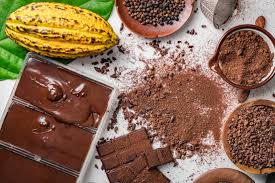
It may sound harsh, but it's true: there's chocolate, and then there's chocolate. Anyone who has compared garden variety grocery store options to higher-grade varieties understands the difference. But what exactly separates an everyday candy bar from the upper echelons? To find an answer, a research team at the University of Nottingham's School of Biosciences dove deep into the chemical complexities of one of the world's most popular treats.
Their results, published on August 18 in the journal Nature Microbiology, indicate that it mostly comes down to the fermentation process—a notoriously unpredictable stage in harvesting. But after working with cacao bean farmers, the team now believes they have identified the unique combination of elements that control quality. By tailoring cocoa starter cultures similar to brewing beer, they say we're now on the verge of a new era in high-grade chocolate.
From cacao to cocoa
Pre-Hispanic South American communities first domesticated cacao trees (Theobroma cacao) at least 5,300 years ago before introducing the tropical evergreen species into Mesoamerican societies. Cacao was originally utilized in spiritual ceremonies, while multiple cultures used the beans themselves for currency.
Harvesting cacao begins with splitting open the cacao tree's seed pods and separating the rind from the pulp and seeds. The latter two components are then piled together and left to ferment as the pulp liquifies. During this phase, the pale yellow seeds turn into a dark brown or even violet hue and are later extracted for additional drying and fermentation over another 3 to7 days. It's after this fermentation process that manufacturers generally start referring to the beans as cocoa instead of cacao. From there, they are ground down and shipped around the world.
Bioscientists began their investigation for this study right at the source itself—the cacao beans (Theobroma cacao). The team examined cacao bean temperature, pH levels, and microbial communities throughout the fermentation process to identify the key shifts and details that contribute to the final product. They found that fermentation itself remains one of the most pivotal pieces of the puzzle. It sets the standard for flavor complexity, aroma maturation, as well as the reduction in initial bean bitterness.
"Fermentation is a natural, microbe-driven process that typically takes place directly on cocoa farms, where harvested beans are piled in boxes, heaps, or baskets," study first author and microbial ecologist David Gopaulchan said in a statement. "In these settings, naturally occurring bacteria and fungi from the surrounding environment break down the beans, producing key chemical compounds that underpin chocolate's final taste and aroma."
But Golpaulchan's team was particularly struck by the unpredictability of this unregulated fermentation, which he described as "spontaneous" and "largely uncontrolled."