










Breaking News
What's the Point of Rocketing to the Moon and Mars?
 Apple FORCES iPhone Users To Prove Age With ID Or Lose Unrestricted Internet Access
 Iran War Silver Lining: NATO's Death Knell?
 US Retail Sales Jumped Most In 8 Months In February
Top Tech News
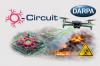 DARPA O-Circuit program wants drones that can smell danger...
 Practical Smell-O-Vision could soon be coming to a VR headset near you
 ICYMI - RAI introduces its new prototype "Roadrunner," a 33 lb bipedal wheeled robot.
 Pulsar Fusion Ignites Plasma in Nuclear Rocket Test
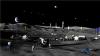 Details of the NASA Moonbase Plans Include a Fifteen Ton Lunar Rover
 THIS is the Biggest Thing Since CGI
 BACK TO THE MOON: Crewed Lunar Mission Artemis II Confirmed for Wednesday...
 The Secret Spy Tech Inside Every Credit Card
 Red light therapy boosts retinal health in early macular degeneration
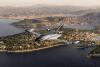 Hydrogen-powered business jet edges closer to certification


World's first hydrogen drone sent into a combat zone
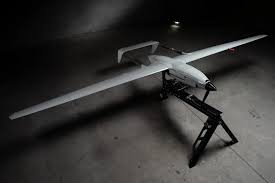
Hydrogen-powered drones aren't exactly new. They've been around for almost 20 years, though previous examples were mainly technology demonstrators and experimental prototypes. Usually, these were intended as long-endurance, high-altitude craft, though an Israeli-US system called Heven AeroTech Z1 is intended for front-line missions, but this has yet to be deployed.
According to Skyeton, the hydrogen variant of the Raybird has been modified to accommodate the new fuel system and to provide enough room and distribute weight for the hydrogen tanks, which are larger than their hydrocarbon fuel equivalents for internal combustion engines.
Because the Raybird is a hybrid, the hydrogen is used to generate electricity while electric motors provide thrust. With a takeoff weight of 51 lb (23 kg), a wingspan of up to 15 ft (4.7 m) and a payload of up to 22 lb (10 kg), the Raybird has a cruising speed of 68 mph (110 km/h) and an endurance of 12 hours. The hybrid system means that craft is quieter compared to a four-stroke engine and has a negligible heat signature, though its altitude is limited to 18,000 ft (5,500 m).
According to the company, the Raybird is not armed. Instead, it carries radar and other sensors for long-range reconnaissance missions. In addition, the design lends itself to mass production. Hydrogen is provided by interchangeable cartridges or field generating units.
"We have converted two years of laboratory testing into a new aircraft concept: it is the same class and weight, but a completely redesigned concept based on electric propulsion," said Roman Knyazhenko, CEO of Skyeton. "Hydrogen fuel is a solution that allows us to combine all the advantages of an electric motor – high reliability, power, and ease of maintenance – with the long-duration continuous flight that is a hallmark of our UAV. Maintaining a balance of these characteristics is vital for us, as the Raybird performs complex deep reconnaissance tasks using high-tech payloads, and the average duration of such missions exceeds 10 hours."