










Breaking News
 Are There, or Will There Be, US Negotiations with Iran?
 Seducing People When It Comes to War
 Dilbert vs. Leviathan: Scott Adams's Greatest Hits
 Judge delivers brutal dismissal of Blake Lively's fat-shaming and sexual harassment claims...
Top Tech News
 DARPA O-Circuit program wants drones that can smell danger...
 Practical Smell-O-Vision could soon be coming to a VR headset near you
 ICYMI - RAI introduces its new prototype "Roadrunner," a 33 lb bipedal wheeled robot.
 Pulsar Fusion Ignites Plasma in Nuclear Rocket Test
 Details of the NASA Moonbase Plans Include a Fifteen Ton Lunar Rover
 THIS is the Biggest Thing Since CGI
 BACK TO THE MOON: Crewed Lunar Mission Artemis II Confirmed for Wednesday...
 The Secret Spy Tech Inside Every Credit Card
 Red light therapy boosts retinal health in early macular degeneration
 Hydrogen-powered business jet edges closer to certification


Lab–grown LIFE takes a major step forward – as scientists use AI to create a virus never seen be
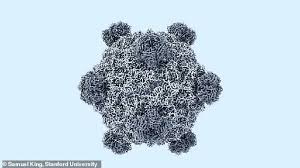
The virus, dubbed Evo–Φ2147, was created by scientists from scratch using new technologies that could revolutionise the course of evolution.
With just 11 genes, compared to the 200,000 in the human genome, this virus is among the simplest forms of life.
However, scientists believe that the same tools could one day create entire living organisms or resurrect long–extinct species.
This artificial virus was specifically created to kill infectious and potentially deadly E. Coli bacteria.
Based on a wild virus known to infect bacteria, scientists used an AI tool called Evo2 to create 285 entirely new viruses from scratch.
While only 16 were able to attack the E. Coli, the most successful were 25 per cent quicker at killing bacteria than the wild variants.
However, previous research has raised concerns that AI–designed pathogens could themselves become a deadly threat to humanity.
This incredible breakthrough comes from the work of scientists at Genyro, a startup led by British scientists and entrepreneur Dr Adrian Woolfson.
Dr Woolfson told the Daily Mail: 'For the last 4 billion years, all life on Earth has evolved by the trial-and-error process of Darwinian evolution by natural selection, which lacks any foresight or intention.
'Natural evolution now has a co-author. That co-author, the emerging ability of AI-driven genome design and genome construction technologies, has the potential to exist alongside natural evolution.'
This has been made possible by the simultaneous development of two technologies: AI that can write genetic code, and new tools for assembling genes in the lab.
The AI tool Evo2 is much like the large language model chatbots ChatGPT and Grok, except that it has been trained on genetic codes rather than written text.