










Breaking News
 Rising Prices and Falling Values--Inflation and Social Decay
 The non-Zionist Israeli Population Could Save the Day
 AfD Launches 'Knife App' As Berlin Violence Surges
 Oil Prices EXPLODE After Trump Signals That US Is Moving To Wartime Economy
Top Tech News
 DARPA O-Circuit program wants drones that can smell danger...
 Practical Smell-O-Vision could soon be coming to a VR headset near you
 ICYMI - RAI introduces its new prototype "Roadrunner," a 33 lb bipedal wheeled robot.
 Pulsar Fusion Ignites Plasma in Nuclear Rocket Test
 Details of the NASA Moonbase Plans Include a Fifteen Ton Lunar Rover
 THIS is the Biggest Thing Since CGI
 BACK TO THE MOON: Crewed Lunar Mission Artemis II Confirmed for Wednesday...
 The Secret Spy Tech Inside Every Credit Card
 Red light therapy boosts retinal health in early macular degeneration
 Hydrogen-powered business jet edges closer to certification


When Trump's bluff meets reality on Iran
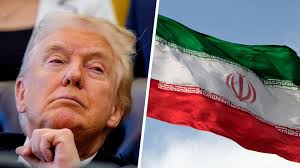
Another US-Iran crisis, another round of carrier deployments and ultimatums, another set of predictions about imminent warfare. Yet here we are again, watching Washington and Tehran engage in their familiar dance of brinkmanship—a choreography that has become depressingly predictable over the past four decades.
The current confrontation, triggered by Iran's brutal crackdown on domestic protests and America's deployment of the USS Abraham Lincoln carrier strike group to the Persian Gulf, follows a script we've seen before.
President Trump threatens "something very tough" while simultaneously acknowledging talks are underway. Iran's Supreme Leader warns of "regional war" while his foreign minister pursues "fair and equitable" negotiations through Omani intermediaries. Regional powers—Turkey, the UAE, Saudi Arabia—scramble to prevent a conflict none of them want.
How will this end? The same way these standoffs always do: not with a bang, but with a grudging return to the status quo ante, dressed up as strategic victory by both sides.
The fantasy that maximum pressure plus military threats will produce Iranian capitulation has been tested repeatedly and has failed each time. The Trump administration's withdrawal from the JCPOA in 2018 and subsequent "maximum pressure" campaign did not bring Iran to its knees—it brought us enriched uranium at near-weapons-grade levels.
The Israeli and American strikes on Iranian nuclear facilities in June 2025 did not eliminate Iran's nuclear program; they likely accelerated Tehran's determination to acquire a deterrent capability.
Now we're told that deploying additional carriers and threatening sustained bombing campaigns will somehow achieve what previous pressure failed to accomplish. This reflects a fundamental misunderstanding of how coercive diplomacy actually works. You cannot bomb a country into submission while simultaneously demanding it negotiate from a position of weakness. The contradiction is not just tactical—it's strategic.
Consider the operational realities that America's saber-rattlers prefer to ignore. Even if the United States launched a sustained air campaign against Iranian nuclear and military facilities—which analysts suggest could require weeks of operations—Iran possesses formidable retaliatory capabilities.
Tehran's missile arsenal can reach every US base from Qatar to Iraq. Its proxies, though weakened, retain capacity to strike across the region. The Strait of Hormuz, through which 20 percent of global oil passes, remains vulnerable.
More fundamentally, ask the critical question that seems to elude Washington's planning: what happens after the bombing stops? Does anyone seriously believe that pulverizing Iranian facilities will produce a pliant regime eager to accept American terms?