










Breaking News
 Rising Prices and Falling Values--Inflation and Social Decay
 The non-Zionist Israeli Population Could Save the Day
 AfD Launches 'Knife App' As Berlin Violence Surges
 Oil Prices EXPLODE After Trump Signals That US Is Moving To Wartime Economy
Top Tech News
 DARPA O-Circuit program wants drones that can smell danger...
 Practical Smell-O-Vision could soon be coming to a VR headset near you
 ICYMI - RAI introduces its new prototype "Roadrunner," a 33 lb bipedal wheeled robot.
 Pulsar Fusion Ignites Plasma in Nuclear Rocket Test
 Details of the NASA Moonbase Plans Include a Fifteen Ton Lunar Rover
 THIS is the Biggest Thing Since CGI
 BACK TO THE MOON: Crewed Lunar Mission Artemis II Confirmed for Wednesday...
 The Secret Spy Tech Inside Every Credit Card
 Red light therapy boosts retinal health in early macular degeneration
 Hydrogen-powered business jet edges closer to certification


The Senate and the Loss of "Mixed Government"
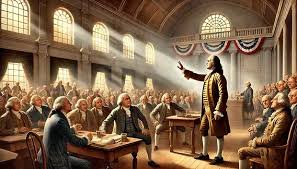
Most serious writing that advocates repeal of the 17th Amendment was published more than a decade ago. At the time, libertarian and constitutionalist circles showed modest interest in restoring Senate selection to state legislatures. That discussion never matured into a sustained reform effort, and it eventually faded.
The reason is not difficult to identify. Critics of the 17th Amendment have persuasively argued that direct election has nationalized the Senate and weakened federalism. What they have not convincingly shown is that repeal alone would solve the problems that led to the amendment's adoption in 1913. Those problems included legislative deadlock, prolonged vacancies, and corruption in the selection process. Opponents of repeal continue to cite these failures as decisive objections, and they remain largely unanswered.
As a result, the debate has settled into a false choice. Defenders of the status quo accept a Senate that functions as a second House of Representatives—driven by national parties, donors, and media attention. Advocates of repeal argue for a return to legislative selection without fully explaining how the defects of the earlier system would be avoided. Neither position offers a structural solution capable of restoring the Senate's original constitutional role.