










Breaking News
 Rising Prices and Falling Values--Inflation and Social Decay
 The non-Zionist Israeli Population Could Save the Day
 AfD Launches 'Knife App' As Berlin Violence Surges
 Oil Prices EXPLODE After Trump Signals That US Is Moving To Wartime Economy
Top Tech News
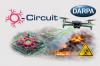 DARPA O-Circuit program wants drones that can smell danger...
 Practical Smell-O-Vision could soon be coming to a VR headset near you
 ICYMI - RAI introduces its new prototype "Roadrunner," a 33 lb bipedal wheeled robot.
 Pulsar Fusion Ignites Plasma in Nuclear Rocket Test
 Details of the NASA Moonbase Plans Include a Fifteen Ton Lunar Rover
 THIS is the Biggest Thing Since CGI
 BACK TO THE MOON: Crewed Lunar Mission Artemis II Confirmed for Wednesday...
 The Secret Spy Tech Inside Every Credit Card
 Red light therapy boosts retinal health in early macular degeneration
 Hydrogen-powered business jet edges closer to certification


IT BYPASSES THE RETINA. IT BYPASSES THE OPTIC NERVE. IT SENDS IMAGES STRAIGHT...
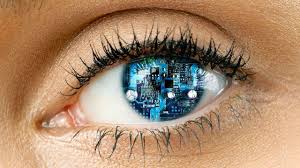
Australian scientists have achieved something historic: a bionic eye that doesn't need functioning eyes to work. The device bypasses the retina and optic nerve entirely — sending visual information directly to the brain's visual cortex. A micro-camera embedded in glasses captures the environment, the signal is converted into electrical impulses, electrodes implanted in the brain deliver those impulses to the visual cortex, and the patient perceives points of light, shapes, movement, and spatial orientation. It's not full vision, but it's enough to walk, identify large objects, and navigate unfamiliar spaces. This is the first visual bypass system to achieve such solid results in humans, and researchers are now refining electrode distribution to create richer, more stable images. Millions affected by glaucoma, macular degeneration, or optic nerve damage could one day regain a sense thought lost forever. Australia just blurred the line between biology and engineering. Sight rebuilt from scratch.