










Breaking News
 Rising Prices and Falling Values--Inflation and Social Decay
 The non-Zionist Israeli Population Could Save the Day
 AfD Launches 'Knife App' As Berlin Violence Surges
 Oil Prices EXPLODE After Trump Signals That US Is Moving To Wartime Economy
Top Tech News
 DARPA O-Circuit program wants drones that can smell danger...
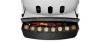 Practical Smell-O-Vision could soon be coming to a VR headset near you
 ICYMI - RAI introduces its new prototype "Roadrunner," a 33 lb bipedal wheeled robot.
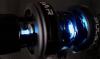 Pulsar Fusion Ignites Plasma in Nuclear Rocket Test
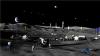 Details of the NASA Moonbase Plans Include a Fifteen Ton Lunar Rover
 THIS is the Biggest Thing Since CGI
 BACK TO THE MOON: Crewed Lunar Mission Artemis II Confirmed for Wednesday...
 The Secret Spy Tech Inside Every Credit Card
 Red light therapy boosts retinal health in early macular degeneration
 Hydrogen-powered business jet edges closer to certification


FBI Wins Court Ruling To Keep Twitter Payments Secret
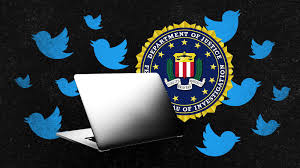
Judicial Watch, which had sued under the Freedom of Information Act, walked away empty-handed.
We obtained a copy of the opinion for you here.
You may remember our earlier reporting on how the FBI was paying Twitter. The payments totaled at least $3.4 million between October 2019 and February 2021 alone. That figure emerged from the Twitter Files released in December 2022. The FBI has never confirmed it. Neither has Twitter. And now, thanks to Boasberg's ruling, the quarterly breakdown that would show exactly when the money flowed, and how much, stays buried.
What were the payments for? Officially, reimbursements. Federal law requires agencies to compensate companies for the cost of responding to subpoenas, search warrants, and national security legal demands. The FBI was sending those requests to Twitter in volume.
During the period leading up to the 2020 election, the FBI's Elvis Chan and colleagues were holding weekly meetings with Twitter staff about "misinformation." They were flagging accounts. They were flagging content. And they were being reimbursed for the legal paperwork that accompanied all of it.
The Trump DOJ, through US Attorney Jeanine Pirro's office, filed for summary judgment in December 2025, arguing the payment amounts are shielded by FOIA's Exemption 7(E). That exemption covers law enforcement techniques and procedures whose disclosure could help criminals evade detection. Boasberg agreed, accepting the government's argument that quarterly payment figures, combined with Twitter's own transparency reports, could let bad actors reverse-engineer where the FBI is looking and where it isn't.
The logic is that if you know the FBI paid Twitter significantly more in Q4 2021 than Q3, you might infer the bureau ramped up surveillance following a specific event. A foreign intelligence service could check whether its operation triggered a spike.
Criminals could compare the FBI's Twitter payments with what it pays other platforms and migrate accordingly. The government's declarations assert this. Boasberg deferred to them, as courts in national security cases routinely do.
The mosaic theory the FBI invoked is real, and courts have repeatedly credited it. The problem isn't the legal framework. The problem is what it conceals.
The FBI was not simply investigating criminals during this period. It was meeting weekly with a private company's content moderation team, flagging accounts of vaccine skeptics, lab-leak researchers, people who questioned the 2020 election, and journalists covering Hunter Biden.
The $3.4 million in payments flowed through that same relationship. The legal-process reimbursements and the content-flagging meetings ran in parallel, conducted by the same FBI personnel, aimed at the same platform, during the same politically charged window before a presidential election.
The quarterly payment breakdown requested would have shown, at a minimum, whether FBI engagement with Twitter spiked during electorally sensitive periods. It would have let the public cross-reference the payment timeline with known events: the weekly misinformation meetings, the account flagging, the suppression of the Hunter Biden laptop story. That is exactly the kind of accountability information FOIA exists to surface.
Instead, Boasberg ruled that the numbers stay hidden because releasing them might tell a foreign spy whether the FBI noticed something. The court gave meaningful weight to the government's national security declarations, as FOIA doctrine requires, and no weight at all to the public's interest in understanding how the FBI was spending money on the platform it was simultaneously using as a content moderation partner.