










Breaking News
 Rising Prices and Falling Values--Inflation and Social Decay
 The non-Zionist Israeli Population Could Save the Day
 AfD Launches 'Knife App' As Berlin Violence Surges
 Oil Prices EXPLODE After Trump Signals That US Is Moving To Wartime Economy
Top Tech News
 DARPA O-Circuit program wants drones that can smell danger...
 Practical Smell-O-Vision could soon be coming to a VR headset near you
 ICYMI - RAI introduces its new prototype "Roadrunner," a 33 lb bipedal wheeled robot.
 Pulsar Fusion Ignites Plasma in Nuclear Rocket Test
 Details of the NASA Moonbase Plans Include a Fifteen Ton Lunar Rover
 THIS is the Biggest Thing Since CGI
 BACK TO THE MOON: Crewed Lunar Mission Artemis II Confirmed for Wednesday...
 The Secret Spy Tech Inside Every Credit Card
 Red light therapy boosts retinal health in early macular degeneration
 Hydrogen-powered business jet edges closer to certification


Why Can't We Thrive Like 1905?
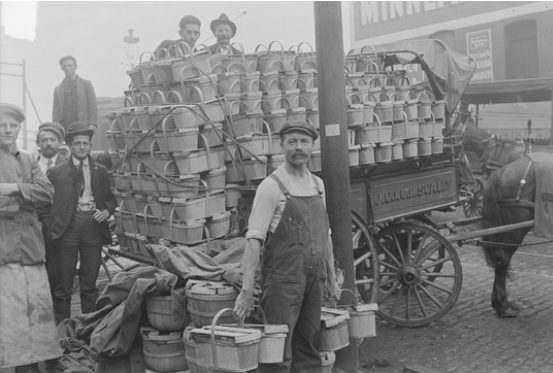
So, do you think life was nasty, brutish, and short in 1905? That there were poor and starving people falling dead on every street corner?
Hardly.
The Wright brothers were flying for 30 minutes at a crack; Einstein was upgrading the laws of physics; telephones and electric lights were being installed all across America; Henry Ford was getting the final pieces in place for his moving assembly line and Model T; radio was being developed; art was flourishing; and the world was more or less at peace.
Sure, we have far more tech and better medicine now, but mostly because the people of earlier times (like the 1905 era) gifted it to us.
People in 1905 lived in heated homes, refrigerated their food, had access to professional physicians, traveled the world (mostly on trains and ships), read daily newspapers (there were many more of them in those days), watched early movies, and ate just about the same foods we eat.
So, was it really that bad a time?
No, it wasn't. In fact, it was better in important ways, and one in particular: It was moving rapidly forward.
Money In The USA: Facts
Consider this:
The working person of 1905 kept his or her money. They ended up saving somewhere between a quarter and a half of everything they made – after living expenses.
It's hard to be completely precise when reconstructing the budgets of average people in 1905 (records are hard to find), but we do have enough for a good, close guess.
Here's how finance worked for a working family man of 1905:
Annual income: $700.00
Annual expenses: ($350.00)
Annual savings: $350.00
If you're thinking that I'm taking liberties with these numbers, let me assure you that I'm not – I'm being conservative. For example:
The income figure should probably be higher. I've found figures of well over $800 for construction workers.
As for expenses, I rounded up from a New York Times article, dated 29 September, 1907. It specified $325 per year.
Added to that is the fact that many people grew their own food during that time, which would skew the figures further.
As noted initially, I compared these numbers with stories I heard from relatives who lived through the time. My uncle Dave, for example, used to tell me how he got a job paying $390 per year sweeping floors, as an unskilled immigrant who spoke almost no English, in 1903.
The next time you drive through an old part of town and see the grand old houses, remember that people were able to build and buy them because their paychecks weren't stripped bare. There were no income taxes in 1905, no sales taxes, no state taxes, and not much in the way of property taxes.
There was also no such thing as a military-industrial complex in those days, and – miracle of miracles – the rest of the world survived!