










Breaking News
 Rising Prices and Falling Values--Inflation and Social Decay
 The non-Zionist Israeli Population Could Save the Day
 AfD Launches 'Knife App' As Berlin Violence Surges
 Oil Prices EXPLODE After Trump Signals That US Is Moving To Wartime Economy
Top Tech News
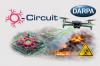 DARPA O-Circuit program wants drones that can smell danger...
 Practical Smell-O-Vision could soon be coming to a VR headset near you
 ICYMI - RAI introduces its new prototype "Roadrunner," a 33 lb bipedal wheeled robot.
 Pulsar Fusion Ignites Plasma in Nuclear Rocket Test
 Details of the NASA Moonbase Plans Include a Fifteen Ton Lunar Rover
 THIS is the Biggest Thing Since CGI
 BACK TO THE MOON: Crewed Lunar Mission Artemis II Confirmed for Wednesday...
 The Secret Spy Tech Inside Every Credit Card
 Red light therapy boosts retinal health in early macular degeneration
 Hydrogen-powered business jet edges closer to certification


Are You Being Watched By Smart Glasses? Here's How To Check
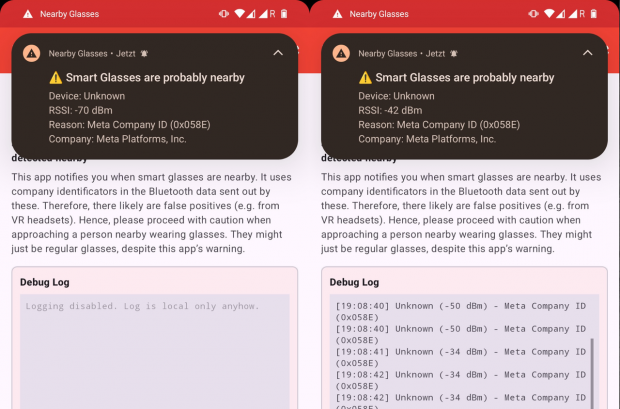
Yet, as AI-powered glasses gain popularity, they introduce new privacy and security concerns, with one smartphone app emerging as an early countermeasure.
As first reported by tech blog 404 Media, the new smartphone app Nearby Glasses scans the Bluetooth signature emitted by smart glasses and sends a push notification to the user if a device is detected nearby.
"I consider it to be a tiny part of resistance against surveillance tech," the app's developer, Yves Jeanrenaud, told 404 Media.
The emergence of this app comes as we've been highlighting that mass adoption of smart glasses is in its early stages; it is happening now, and we've already mapped the supply chain tied to how to profit from the explosion of these glasses (as well as highlighted Meta's supplier).
But alongside that adoption curve comes a series of risks, from surveillance concerns to child safety issues. Simply put, not everyone wants to be recorded.
"This is a tech solution to a social problem exaggerated by technology. I do not want to promote tech solutionism, nor do I want people to feel falsely secure. It's still imperfect," Jeanrenaud said.
Remember when Apple had to start warning everyone about AirTags around them? Well, Tim Cook may eventually have to roll out a similar update for smart glasses if there's enough public uproar.