










Breaking News
 Rising Prices and Falling Values--Inflation and Social Decay
 The non-Zionist Israeli Population Could Save the Day
 AfD Launches 'Knife App' As Berlin Violence Surges
 Oil Prices EXPLODE After Trump Signals That US Is Moving To Wartime Economy
Top Tech News
 DARPA O-Circuit program wants drones that can smell danger...
 Practical Smell-O-Vision could soon be coming to a VR headset near you
 ICYMI - RAI introduces its new prototype "Roadrunner," a 33 lb bipedal wheeled robot.
 Pulsar Fusion Ignites Plasma in Nuclear Rocket Test
 Details of the NASA Moonbase Plans Include a Fifteen Ton Lunar Rover
 THIS is the Biggest Thing Since CGI
 BACK TO THE MOON: Crewed Lunar Mission Artemis II Confirmed for Wednesday...
 The Secret Spy Tech Inside Every Credit Card
 Red light therapy boosts retinal health in early macular degeneration
 Hydrogen-powered business jet edges closer to certification


What we know about the protests sweeping Iran
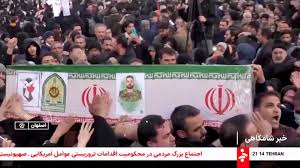
Protests in Iran over the country's economic conditions, which broke out in late December 2025, have snowballed into a broader challenge to the clerical rulers who have governed Iran since the 1979 Islamic Revolution.
Here is what we know about the protests in Iran so far.
What are the protests in Iran about?
Protests broke out over soaring prices in Iran on December 28, 2025 after the rial plunged to a record low against the United States dollar in late December.
The protest started with shopkeepers in Tehran's Grand Bazaar who shuttered their shops and began demonstrating. It then spread to other provinces of Iran.
On Monday, the rial was trading at more than 1.4 million to $1, a sharp decline from around 700,000 a year earlier in January 2025 and around 900,000 in mid-2025. The plummeting currency has triggered steep inflation, with food prices an average of 72 percent higher than last year. Annual inflation is currently around 40 percent.
Iran's economy is ailing for several reasons. The country fought a 12-day war with Israel in June 2025, which resulted in infrastructural damage in several Iranian cities.
Additionally, in September 2025, the United Nations re-imposed sanctions on Iran over its nuclear programme when the UN Security Council voted against permanently lifting economic sanctions on Iran.
In December, Iran introduced a new tier in its national fuel subsidy system, effectively raising the price of what had been some of the world's cheapest petrol or gasoline and adding to the financial strain on households.
Officials will now reassess fuel prices every three months, opening the door to further hikes. At the same time, food prices are set to climb after the Central Bank recently scrapped a preferential, subsidised dollar-rial rate for all imports except medicine and wheat.
"If only the government, instead of just focusing on fuel, could bring down the price of other goods," taxi driver Majid Ebrahimi told Al Jazeera in late December. "The prices of dairy products have gone up six times this year and other goods more than 10 times."
While chants by protesters initially focused on the ailing economy, they have switched to opposition to the clerical establishment in Iran. Some protesters have also begun chanting in support of Reza Pahlavi, the exiled son of deposed Shah of Iran Mohammad Reza Pahlavi, and the heir to the former Pahlavi monarchy.
Many supporters of Pahlavi are calling for a return to the monarchy, although Pahlavi himself says he favours holding a referendum to determine what type of government structure Iranians want.
After Mohammad Mosaddegh, Iran's prime minister who was democratically elected in 1951, nationalised the British-controlled oil industry in Iran, he was overthrown in a 1953 coup backed by the US and the United Kingdom to secure Western oil interests. A repressive royal rule was reinstated until 1979, when Mohammad Reza Pahlavi, the last shah of Iran, fled the country as the Islamic revolution took hold. He died in Egypt in 1980.
"There were chants in his [Pahlavi's] support on the streets of Iran among other chants in this round of protests," Maryam Alemzadeh, an associate professor in the history and politics of Iran at the University of Oxford, told Al Jazeera.