










Breaking News
 Rising Prices and Falling Values--Inflation and Social Decay
 The non-Zionist Israeli Population Could Save the Day
 AfD Launches 'Knife App' As Berlin Violence Surges
 Oil Prices EXPLODE After Trump Signals That US Is Moving To Wartime Economy
Top Tech News
 DARPA O-Circuit program wants drones that can smell danger...
 Practical Smell-O-Vision could soon be coming to a VR headset near you
 ICYMI - RAI introduces its new prototype "Roadrunner," a 33 lb bipedal wheeled robot.
 Pulsar Fusion Ignites Plasma in Nuclear Rocket Test
 Details of the NASA Moonbase Plans Include a Fifteen Ton Lunar Rover
 THIS is the Biggest Thing Since CGI
 BACK TO THE MOON: Crewed Lunar Mission Artemis II Confirmed for Wednesday...
 The Secret Spy Tech Inside Every Credit Card
 Red light therapy boosts retinal health in early macular degeneration
 Hydrogen-powered business jet edges closer to certification


You Can't Treat Russia or China Like Iran
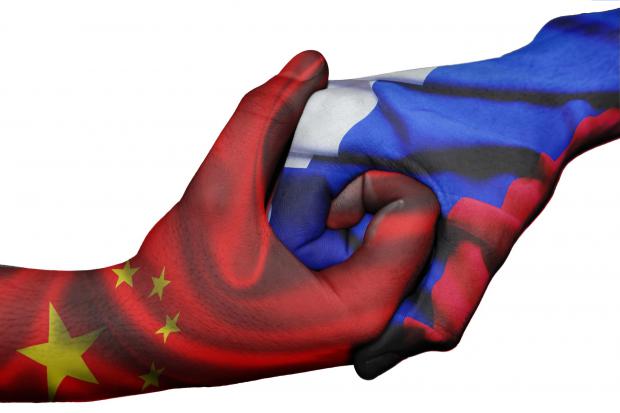
The reality reveals something far different. Trump's outreach to Russia is not Pat Buchanan style non-interventionism. It is a calculated attempt to use Russia as a geopolitical weapon against China and Iran, rooted in the same manipulative great power politics that has poisoned American foreign policy for generations.
Secretary of State Marco Rubio openly proposed at February 2025 Riyadh talks that the United States could "partner with the Russians, geopolitically, on issues of common interest." Keith Kellogg, Special Envoy for Ukraine, stated the goal bluntly at Munich Security Conference. "What we're going to do is try to break this alliance," he said, referring to Russia's partnerships with China, Iran, and North Korea.
This is the Reverse Nixon strategy. Where Richard Nixon exploited the Sino-Soviet split to woo China from Moscow in 1972, Trump now seeks to pry Russia from Beijing. The intellectual godfather was Henry Kissinger, who personally advised Trump during his first term to improve relations with Russia to isolate China, essentially flipping his own famous triangular diplomacy.
The entire enterprise rests on fantasy.
The Reverse Nixon strategy has been gestating in Trump world since 2016. Michael Flynn was the earliest advocate. Before taking office, he communicated with Russian Ambassador Sergey Kislyak about sanctions. His deputy K.T. McFarland wrote that "Russia is key that unlocks door." Flynn's forced resignation after twenty-four days and the Mueller investigation killed the first term effort.
MAGA strategist Steve Bannon described the overture toward Russia in civilizational terms, viewing it as a necessary realignment to balance against China. "To me, the economic war with China is everything," he declared in a 2017 interview with The American Prospect. Bannon has long argued that Russia and the United States share what he calls "Judeo-Christian" civilizational roots and should unite against the strategic threat of China—which he views as a godless, authoritarian hegemon in a zero-sum contest for global dominance.
For all the rhetoric about improving Russian relations, Trump's first term delivered punitive actions that dramatically escalated tensions. His administration abandoned the Open Skies Treaty and the INF Treaty, dismantling critical arms control infrastructure. He supplied deadly weaponry to Ukraine, including anti-tank weapons. His administration assaulted Russian military personnel in Syria.
Most significantly, Trump endorsed the Countering America's Adversaries Through Sanctions Act, the harshest penalties enacted against Russia. These were not the actions of someone pursuing genuine diplomatic normalization. They were the actions of someone maintaining U.S. primacy while dangling the possibility of partnership to extract geopolitical concessions.
Trump's second term made the strategy explicit. Marco Rubio has called China "the single greatest challenge this nation has ever faced" and argued the Ukraine war should end because it benefits China. The East Asian behemoth is not the only target of DC. The Soufan Center noted in March 2025 that if relations improve, "Trump officials will look to their Russian counterparts for help in re-imposing strict limitations on Iran's nuclear program." Bloomberg reported in March 2025 that Russia agreed to assist Washington in communicating with Iran on various issues, including its nuclear program and support for regional proxy groups. Trump had relayed that interest directly to Putin during a February phone call, and top administration officials followed up at talks in Riyadh days later.