










Breaking News
 Rising Prices and Falling Values--Inflation and Social Decay
 The non-Zionist Israeli Population Could Save the Day
 AfD Launches 'Knife App' As Berlin Violence Surges
 Oil Prices EXPLODE After Trump Signals That US Is Moving To Wartime Economy
Top Tech News
 DARPA O-Circuit program wants drones that can smell danger...
 Practical Smell-O-Vision could soon be coming to a VR headset near you
 ICYMI - RAI introduces its new prototype "Roadrunner," a 33 lb bipedal wheeled robot.
 Pulsar Fusion Ignites Plasma in Nuclear Rocket Test
 Details of the NASA Moonbase Plans Include a Fifteen Ton Lunar Rover
 THIS is the Biggest Thing Since CGI
 BACK TO THE MOON: Crewed Lunar Mission Artemis II Confirmed for Wednesday...
 The Secret Spy Tech Inside Every Credit Card
 Red light therapy boosts retinal health in early macular degeneration
 Hydrogen-powered business jet edges closer to certification


War on Iran, Pentagon After-Action Report, Week 1
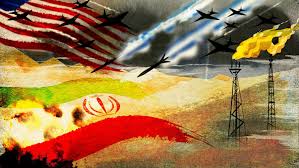
Pre-war Propaganda: Assumptions were made that the AIPAC-funded US Congress was on board. TikTok and US news corporations were primed around the long-repeated "Iran is getting a nuclear weapon next week" message and their owners and advertisers under full deep state/MICIMATT control. Polls showing MAGA unity behind Trump was collapsing on the issues of war and regime change were ignored, and even shut down. The 1991 Iraq invasion and the 2001-2003 Afghanistan and Iraq wars – and even the recent special forces kidnap of Maduro – were all preceded by months of intense and coordinated domestic public opinion-shaping that would support the eventual Pentagon action. That did not happen for the current war, or if it did, it was ineffective.
Political Objective: Pre-war crafting of an integrated political objective was fragmented; as a result, government reports and messaging on the objective varied substantively and continually from the moment of first fire. In the first eight days of what was to have been a weekend war, with success to be celebrated on Purim the following Tuesday, no less than six different "war objectives" were announced by the Executive Branch. A seventh US objective emerged on Day 7 requiring an Iranian unconditional surrender. This lack of political and communications discipline was preventable, through prior teamwork by critical sectors of the Executive Branch. This teamwork did not happen, or happened informally and asynchronously with little attention to detail or understanding. Conducting the first "joint" war with the IDF absent a mutual defense treaty or military compact between the two nations, and without clarifying and confirming singular and substantiated objectives was problematic. The Secretaries of State and War were chosen to serve not as credible and experienced advisors to the White House, but as ideologues who would unquestioningly take White House diktats and comply with the planning outputs of others. Thus, the well-qualified Director of National Intelligence, a position created to correct the intelligence "failures" of 9/11, was publicly sidelined, and the State Department "negotiators" aiming to "prevent" a war were real estate relatives and cronies of the President.
Likewise, Israel's political objectives as broadcasted, remain unclear and variable, despite its generally superior political and media discipline. The US and Israeli administration currently agree on assassination as a political tool, and on using the "shock and awe" of civilian casualties and destruction of civilian centers as a means to communicate their seriousness to the enemy.
Military Objective: Joint military objectives of the US-IDF attack on Iran remain unclear. Factors influencing the US military objectives included fragmented guidance from the Executive suite, ignoring lessons learned from ongoing and past regional war efforts, four ongoing years of active logistics, munitions, intelligence and targeting assistance/consumption in the Ukraine-Russia war, and a politicized intelligence infrastructure within DIA. Beyond that, as is always the case, CIA, IDF and Mossad activities, intentions, and objectives in the region were only partially understood and incorporated.
The November 2025 National Security Strategy shifted Pentagon focus and resources toward China, and away from Europe and the Middle East. In fact, the President's cover NSS letter stated, by way of launching this new focus, stated "[the US] obliterated Iran's nuclear enrichment capacity" in June 2025. Under an experienced Secretary of Defense, leading a coordinating realignment of Pentagon strategy and risk orientation, even without mixed messages from the White House, would have been challenging. Secretary Hegseth, hampered by a lack of preparation and seasoning, and having alienated many of his flag officers early on, was limited in influence, and his guidance reduced to punchlines.