










Breaking News
 Rising Prices and Falling Values--Inflation and Social Decay
 The non-Zionist Israeli Population Could Save the Day
 AfD Launches 'Knife App' As Berlin Violence Surges
 Oil Prices EXPLODE After Trump Signals That US Is Moving To Wartime Economy
Top Tech News
 DARPA O-Circuit program wants drones that can smell danger...
 Practical Smell-O-Vision could soon be coming to a VR headset near you
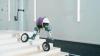 ICYMI - RAI introduces its new prototype "Roadrunner," a 33 lb bipedal wheeled robot.
 Pulsar Fusion Ignites Plasma in Nuclear Rocket Test
 Details of the NASA Moonbase Plans Include a Fifteen Ton Lunar Rover
 THIS is the Biggest Thing Since CGI
 BACK TO THE MOON: Crewed Lunar Mission Artemis II Confirmed for Wednesday...
 The Secret Spy Tech Inside Every Credit Card
 Red light therapy boosts retinal health in early macular degeneration
 Hydrogen-powered business jet edges closer to certification


The Bretton Whoops
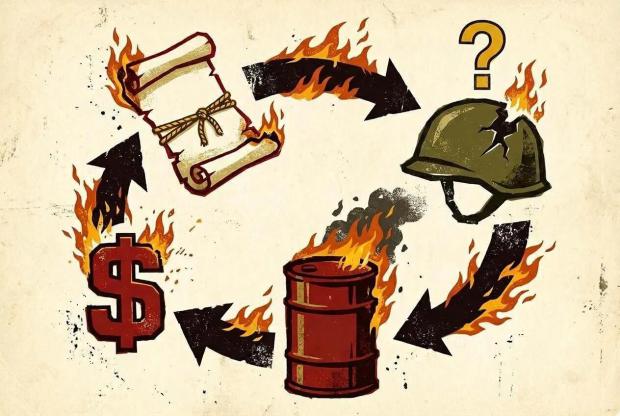
The world didn't wake up one morning and decide to distrust the dollar. It was a process. Gradually, then suddenly, as these things tend to go.
It started with Venezuela. In 2019, Caracas asked the Bank of England to return its own gold - 31 tonnes, sitting in a vault in London, belonging to the Venezuelan central bank. The Bank of England said no. The justification was creative: London had decided to recognise a man who had never won an election as Venezuela's "legitimate" president, so it couldn't very well hand $2 billion in gold to the actual government. Problem solved. Maduro was a dictator, everyone agreed he was terrible, and so the consensus was essentially: who cares.
Everyone filed it under "rogue state gets what it deserves" and moved on.
Then Russia invaded Ukraine in 2022, and $300 billion in Russian sovereign reserves got frozen overnight. Again, the justification was airtight, the villain was obvious, and the Western financial world applauded itself. What nobody wanted to discuss was the precedent. Assets held in Western financial institutions were no longer safe if the political winds shifted against you. That was new. That was genuinely new. And every central bank and sovereign wealth fund on earth noticed, even if they did say nothing publicly.
Then Trump came back. Tariffs on allies. Threats to annex Greenland. The implicit message that the post-war security architecture was now a negotiable service rather than a commitment. The dollar's reserve currency status had always rested on two pillars: the dominance of the US economy, and the reliability of the US government as a custodian of the system. One of those pillars was now being kicked.
By the time the Iran war started, the trust account was already badly overdrawn.
The petrodollar was a simple deal. The Gulf states price their oil in dollars, recycle the surplus into US Treasuries, and in exchange get American military protection. Clean, elegant, and - for fifty years - it actually worked. The US got permanent demand for its currency and its debt. The Gulf got security guarantees backed by the most powerful military on earth.
Five decades of procurement scandals and DEI hires later, someone called the bluff.
US bases across the Gulf - Bahrain, Qatar, Kuwait, the UAE - were always sold as the physical expression of the guarantee. The muscle that backed the paper. They were protection. Except now those bases are targets. The countries hosting them are getting hit precisely because they host them. What once was "US military presence as shield" has collapsed and became "US military presence as a bullseye".