










Breaking News
 Rising Prices and Falling Values--Inflation and Social Decay
 The non-Zionist Israeli Population Could Save the Day
 AfD Launches 'Knife App' As Berlin Violence Surges
 Oil Prices EXPLODE After Trump Signals That US Is Moving To Wartime Economy
Top Tech News
 DARPA O-Circuit program wants drones that can smell danger...
 Practical Smell-O-Vision could soon be coming to a VR headset near you
 ICYMI - RAI introduces its new prototype "Roadrunner," a 33 lb bipedal wheeled robot.
 Pulsar Fusion Ignites Plasma in Nuclear Rocket Test
 Details of the NASA Moonbase Plans Include a Fifteen Ton Lunar Rover
 THIS is the Biggest Thing Since CGI
 BACK TO THE MOON: Crewed Lunar Mission Artemis II Confirmed for Wednesday...
 The Secret Spy Tech Inside Every Credit Card
 Red light therapy boosts retinal health in early macular degeneration
 Hydrogen-powered business jet edges closer to certification


Controversial geoengineering project sees scientists pump 65,000 litres of chemicals into...
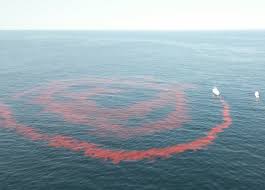
Last August, 65,000 litres of bright red chemicals were pumped into the Gulf of Maine – yet this wasn't an enormous industrial disaster.
Instead, it was a controversial geoengineering experiment that scientists claim could help to slow down global warming.
The oceans already hold around 38,000 billion tonnes of CO2, trapped as dissolved sodium bicarbonate, or baking soda.
The geoengineering method known as Ocean Alkalinity Enhancement (OAE) aims to speed up this natural process by resetting the ocean's pH.
Over four days, scientists added vast quantities of sodium hydroxide – an alkaline chemical tagged with a red dye – to the waters off the coast of Boston.
Making the ocean more alkaline should encourage it to absorb even more CO2 from the atmosphere.
However, critics have warned that the potential effects on marine life remain uncertain.
Gareth Cunningham, Director of Conservation and Policy at the Marine Conservation Society, told the Daily Mail: 'These approaches are resource–intensive and their ecological impacts are still poorly understood.'
For years, scientists have put forward OAE as one of the leading potential solutions to climate change.
In theory, the novel approach could solve two problems at once by locking away excess CO2 from the atmosphere and fixing the oceans' rising acidity.
Without an 'antacid' like sodium hydroxide to react with, CO2 dissolving in the oceans forms a mild acid that has slowly but surely reduced the pH level.
This is already having catastrophic effects on sea life, as the acid dissolves marine creatures' shells, damages coral, and even wears away sharks' teeth.
The LOC–NESS (Locking Ocean Carbon in the Northeast Shelf and Slope) project is the first large–scale experiment to test the impact of OAE in an open water setting.
With approval from the US Environmental Protection Agency and engagement with local fishers, scientists from the Woods Hole Oceanographic Institution poured alkaline chemicals into the ocean 50 miles (80 km) off the Massachusetts coast.