










Breaking News
 Ivermectin & Cancer: 3 Tumor-Killing Mechanisms No Oncologist Is Talking About
 Two Weeks to Flatten the Fuel Curve: Digital IDs, Rationing, Energy Austerity
 9 Proven Ways to Boost Your Soil Health
 This Forgotten NASA Insulation Trick Cuts AC Costs 70%. They Stopped Teaching It in 1991.
Top Tech News
 We Build and Test Microwave Blocking Panels - Invisible to Radar
 Man Successfully Designs mRNA Vaccine To Treat His Dog's Cancer
 Watch: Humanoid robot gets surprisingly good at tennis
 Low-cost hypersonic rocket engine takes flight for US Air Force
 Your WiFi Can See You. Here's How.
 Decentralizing Defense: A $96 Guided Rocket Just Put Precision Warfare into the Hands of the People
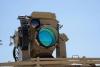 Israel's Iron Beam and the laser future of missile defense
 Scientists at the Harbin University of Science and Technology have pioneered a sophisticated...
 Researchers have developed a breakthrough "molecular jackhammer" technique...
 Human trials are underway for a drug that regrows human teeth in just 4 days.



Iran Ready To Let Japanese Ships Use Hormuz As Chinese, Indian Tankers Already Allowed Passage
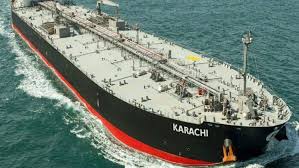
While Iran's decision to close the Straits of Hormuz in response to the US-Israeli bombing campaign was understandable, after all it's the biggest point of leverage the IRGC-controlled nation has left (it is certainly more understandable than bombing all of its Gulf neighbors in the process pushing them from being on the fence to being staunchly anti-Iran), there was always a bit of a glitch in Tehran's calculus: as we showed the day the war broke out, the biggest clients of Gulf exporting nations by far are China, India, Korea and Japan, namely Asian countries which - with the exception of Japan - are hardly allies of the US. Therefore, the countries that would be hit the hardest were those Pacific rim nations that would buy millions of barrels of oil daily from Gulf countries before the war, and now find that oil indefinitely blocked behind the Strait.
Nowhere has this asymmetric impact been more evident than in the price of Asian-basin grades such as Dubai and Oman, which hit a record $170 on Thursday before retracing modestly to $160, while at the same time Europe-heavy Brent has been trading around $110, and WTI crude which primarily feeds the US is trading just below $100.
As a result, it's hardly a surprise that while ideologically they may support Iran, Asia's largest Gulf clients are suddenly finding themselves facing crashing stock markets and a brutal stagflation.
It's also why while the world's attention has been focused on the escalating daily attacks in the Gulf, which last week crippled global LNG supplies for years - in the process once again hammering Asian supply chains far more than the US which for years has been swimming in natural gas - there has been a furious backchanneling operation to allow passage for tankers belong to said Asian countries.
To wit, late on Friday, Iranian Foreign Minister Abbas Araghchi said the nation was prepared to facilitate passage for Japanese vessels through the Strait of Hormuz after consultations between the countries' officials, according to Kyodo News.
"We have not closed the strait. It is open," Araghchi said in a telephone interview with Kyodo News on Friday. He also stressed that Iran, which was attacked by the United States and Israel in late February, is seeking "not a cease-fire, but a complete, comprehensive and lasting end to the war."
Araghchi said Iran has not closed the strategic waterway but has imposed restrictions on vessels belonging to countries involved in attacks against Iran, while offering assistance to others amid heightened security concerns. He added that Iran is prepared to ensure safe passage for countries such as Japan if they coordinate with Tehran.
Japan relies on the Middle East for over 90 percent of its crude oil imports, most of which travel through the strait.
Araghchi made the comments in an interview with the Japanese news agency on Friday, Kyodo said. Japan relies heavily on the Middle East for its oil-import needs. The war in Iran prompted the Asian nation to release oil from its reserves this month.