










Breaking News
 Ivermectin & Cancer: 3 Tumor-Killing Mechanisms No Oncologist Is Talking About
 Two Weeks to Flatten the Fuel Curve: Digital IDs, Rationing, Energy Austerity
 9 Proven Ways to Boost Your Soil Health
 This Forgotten NASA Insulation Trick Cuts AC Costs 70%. They Stopped Teaching It in 1991.
Top Tech News
 We Build and Test Microwave Blocking Panels - Invisible to Radar
 Man Successfully Designs mRNA Vaccine To Treat His Dog's Cancer
 Watch: Humanoid robot gets surprisingly good at tennis
 Low-cost hypersonic rocket engine takes flight for US Air Force
 Your WiFi Can See You. Here's How.
 Decentralizing Defense: A $96 Guided Rocket Just Put Precision Warfare into the Hands of the People
 Israel's Iron Beam and the laser future of missile defense
 Scientists at the Harbin University of Science and Technology have pioneered a sophisticated...
 Researchers have developed a breakthrough "molecular jackhammer" technique...
 Human trials are underway for a drug that regrows human teeth in just 4 days.



'Tax resistance' gains attention amid ICE protests, Iran war -- and IRS penalties could foll
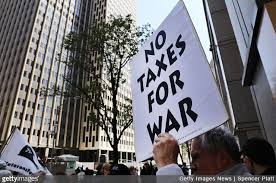
"I'm not paying my federal income tax this year," Cohen said in a widely viewed TikTok video from March 2 about her decision.
The 31-year-old community organizer filed her federal tax return, which shows a balance due of $8,830, according to a tax document reviewed by CNBC. But Cohen said she deliberately chose to withhold payment of that bill as a protest against immigration detention, including ICE facilities, and U.S. strikes on Iran launched without congressional approval.
While voicing resistance to taxes is legal, refusing to pay taxes owed can violate federal law and lead to serious penalties.
"It's completely OK to be unhappy and be dissatisfied with our government," said Josh Youngblood, owner of The Youngblood Group, a Dallas-based tax firm. "But not paying taxes, or engaging in tax fraud or evasion, is not the answer."
In addition to penalties and interest that start accruing immediately on their past-due balances, tax protesters can face "long-term consequences," such as wage garnishment, a tax lien on property or even jail time, according to Michele Frank, associate professor of accountancy at Miami University. Federal courts have a long track record of siding with the Internal Revenue Service in cases involving tax resistance, routinely dismissing these claims as frivolous and, in some instances, imposing additional penalties.
Cohen told CNBC she is fully aware of the potential risks and that speaking openly about the decision could attract additional scrutiny from federal authorities.
Her protest is directed at federal spending priorities, not taxation itself, Cohen said. She paid about $3,000 in Illinois state taxes, according to a tax document reviewed by CNBC, and said she sees value in how those dollars support state and local services.
Cohen said her decision is personal and not something she is encouraging others to do, but hopes it pushes people to reflect on whether their actions match their beliefs.
Renewed interest in tax resistance
Cohen's protest follows a long tradition of so-called war tax resistance, in which people withhold some or all of their federal taxes to oppose government policies.
"It's been going on pretty much as long as we've been a country," Frank said.
Typically, there's an uptick in tax protesting — with filers holding back some or all of their tax payments — when the U.S. government engages in a war or other "controversial" activities, she said.
That appears to be happening again, according to the National War Tax Resistance Coordinating Committee, an educational nonprofit founded in the early 1980s by activists connected to the anti-Vietnam War movement.
The group's website had averaged about 40,000 unique visitors a year until the war in Gaza began in 2023, according to Lincoln Rice, the organization's coordinator. In January 2026 alone, traffic surged to more than 110,000 visitors.