










Breaking News
 I've been testing a new app built with agentic AI...
 The Dot-com bubble and the Housing bubble were both preceded by an energy shock
 Do we rellay have free will to make make conscious choices as consumers as to what we consume...
 Iran didn't strike a single chip factory.
Top Tech News
 We Build and Test Microwave Blocking Panels - Invisible to Radar
 Man Successfully Designs mRNA Vaccine To Treat His Dog's Cancer
 Watch: Humanoid robot gets surprisingly good at tennis
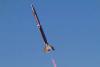 Low-cost hypersonic rocket engine takes flight for US Air Force
 Your WiFi Can See You. Here's How.
 Decentralizing Defense: A $96 Guided Rocket Just Put Precision Warfare into the Hands of the People
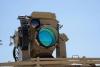 Israel's Iron Beam and the laser future of missile defense
 Scientists at the Harbin University of Science and Technology have pioneered a sophisticated...
 Researchers have developed a breakthrough "molecular jackhammer" technique...
 Human trials are underway for a drug that regrows human teeth in just 4 days.



Sophisticated drones attacked Louisiana's Barksdale bomber base
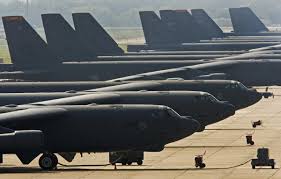
Barksdale Air Force Base in Louisiana, in Bossier Parish not far from Shreveport, was attacked by drone swarms during the week of March 9. The attack disrupted B-52H aircraft launches in support of Operation Epic Fury against Iran. It is the first time a US airbase was temporarily put out of operation in wartime, something that never happened even in World War II.
Each wave forced the Air Force to halt operations and send its personnel to shelters. Barksdale is the command hub of the US Air Force Global Strike Command. Not only are B-52s based there, but the base is part of America's nuclear triad. It shelters long range nuclear cruise missiles (such as the AGM-86B) and will soon house a new Long Range Standoff cruise missile. Shelters and storage sites for the new missiles are under construction.
The only other significant US airbase for B-52s is in Minot Air Force Base in North Dakota. Both bases are supporting Epic Fury. The aircraft can either fly to the UK and then on to Iran, or (as they did during the period when the UK blocked them) fly directly from Barksdale to Iran, a very long mission requiring eight in-air refuelings.
The drone waves lasted around four hours each day, an extraordinarily long loiter time for a drone. It is not known if the drones were fixed wing or quadcopter types, or how they were powered (liquid fuel or electrical). Each wave consisted of 12 to 15 drones, and the drones flew with their lights on, intentionally making them visible.
Barksdale AFB does not have air defenses, nor does it have fighter jets that can take down drones.
The airbase does have some electronic countermeasures that were designed to disable GPS and the datalinks between the drones and their remote operators. The electronic countermeasures failed to work.
The drones themselves may have been autonomous or semi-autonomous, and operated in ways suggesting the drones were equipped with multiple sensors that directed the behavior of each drone over the base and in response to attempts at jamming.
In a nutshell the drones that operated over Barksdale were far more sophisticated than anything seen in Ukraine, where drones are used heavily, and well beyond Iranian capabilities.
The drones could have come from a potential adversary, China being best equipped to produce a drone of the type that flew over Barksdale. From what has been observed, the drone design surpasses almost anything in the US arsenal.
What we know is that the drones had extraordinary range, could resist broad spectrum jamming, and featured non-commercial signal characteristics. Even more provocatively, the drones used various ingress and egress routes and operated in dispersed patterns, making traceability (via trying to triangulate on signals) virtually impossible.