










Breaking News
 I've been testing a new app built with agentic AI...
 The Dot-com bubble and the Housing bubble were both preceded by an energy shock
 Do we rellay have free will to make make conscious choices as consumers as to what we consume...
 Iran didn't strike a single chip factory.
Top Tech News
 We Build and Test Microwave Blocking Panels - Invisible to Radar
 Man Successfully Designs mRNA Vaccine To Treat His Dog's Cancer
 Watch: Humanoid robot gets surprisingly good at tennis
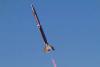 Low-cost hypersonic rocket engine takes flight for US Air Force
 Your WiFi Can See You. Here's How.
 Decentralizing Defense: A $96 Guided Rocket Just Put Precision Warfare into the Hands of the People
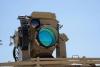 Israel's Iron Beam and the laser future of missile defense
 Scientists at the Harbin University of Science and Technology have pioneered a sophisticated...
 Researchers have developed a breakthrough "molecular jackhammer" technique...
 Human trials are underway for a drug that regrows human teeth in just 4 days.



Iran Threatens To Destroy Region-Wide Infrastructure As Trump's 48-Hour Ultimatum Ticks Down...
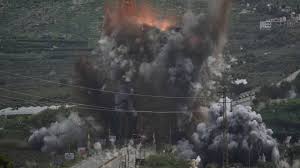
Bessent on Meet the Press: 'Escalate to De-Escalate'
Scott Bessent said US-Israeli strikes are focused on weakening Iran's fortified positions along the Strait of Hormuz as Donald Trump presses a deadline for Tehran to "fully open, without threat" the critical global shipping waterway. He stated the US will "take whatever steps it takes" to eliminate Iran's military capabilities, including its ability to project power abroad; however, it remains to be seen just how degraded Iran's missile program is.
"There has been a campaign… to soften up the Iranian fortifications… that's going to continue until they are completely demolished… Sometimes you have to escalate to de-escalate," he asserted.
As the conflict enters its fourth week, and amid rising oil and gasoline prices which have intensified economic pressure at home, Bessent framed the surge as a temporary cost tied to a longer-term greater objective, stating: "Let's just pick 50 days of temporary elevated prices… Prices will come off on the other side for 50 years of not having an Iranian regime with a nuclear weapon." But then the usual more open-ended caveats: "I don't know whether it's going to be 50 days. I don't know whether it's going to be a hundred days." As the US keeps going up the escalation ladder with Iran, will it be able to come down?
Threatened War on Power Plants Looms
As a reminder here's what President Trump threatened Saturday - so the clock is ticking - assuming he's ready to make good on the promise: "If Iran doesn't FULLY OPEN, WITHOUT THREAT, the Strait of Hormuz, within 48 HOURS from this exact point in time, the United States of America will hit and obliterate their various POWER PLANTS, STARTING WITH THE BIGGEST ONE FIRST!" Trump wrote.
Iran has responded with its own vow of escalation in response. In a post on X, Iran's parliament speaker Mohammad Baqer Qalibaf warned that critical infrastructure and energy facilities across the Middle East will be "irreversibly destroyed" if Iranian power plants are attacked. He wrote:
"Immediately after the power plants and infrastructure in our country are targeted, the critical infrastructure, energy infrastructure, and oil facilities throughout the region will be considered legitimate targets and will be destroyed in an irreversible manner, and the price of oil will remain high for a long time."
$2 Million Hormuz Transit Fee, Except For 'Enemy' Countries
By now it's clear that Iran's approach to the Strait of Hormuz has been to only allow select countries while targeting others' shipping and reportedly mining the waterway. An Iranian official said the strait is open to all vessels except those from "enemy" countries.
Iran state TV has further announced the imposition a $2 million transit fee on ships, with a senior lawmaker stating: "We have established a new regime governing the Strait after 47 years… We have to fund the war."