










Breaking News
 Another TACO Or Is There Something Else Behind Trump's Back Track
 We just reached a tipping point moment
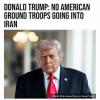 Donald Trump: No American Ground Troops Going into Iran
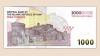 Iran launches 10 million rial note, highest-ever denomination, as war deepens economic crisis
Top Tech News
 We Build and Test Microwave Blocking Panels - Invisible to Radar
 Man Successfully Designs mRNA Vaccine To Treat His Dog's Cancer
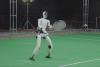 Watch: Humanoid robot gets surprisingly good at tennis
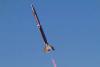 Low-cost hypersonic rocket engine takes flight for US Air Force
 Your WiFi Can See You. Here's How.
 Decentralizing Defense: A $96 Guided Rocket Just Put Precision Warfare into the Hands of the People
 Israel's Iron Beam and the laser future of missile defense
 Scientists at the Harbin University of Science and Technology have pioneered a sophisticated...
 Researchers have developed a breakthrough "molecular jackhammer" technique...
 Human trials are underway for a drug that regrows human teeth in just 4 days.



War Abroad and Authoritarianism at Home
"War is the health of the state." That phrase, coined by Randolph Bourne, explains why opposition to war is a priority of many libertarians.
War allows governments to increase spending, taxes, and regulations in order to feed the war machine. Wars can justify measures that remain in place long after the wars end. An example of this is income tax withholding that was created to fund World War Two.
The use of war as a justification for increased interference in the market is reason enough for libertarians to oppose war. However, war also enables the government to violate liberty. During the Civil War, President Lincoln suspended habeas corpus, shut down newspapers, and instituted a military draft. The draft was also used in World Wars One and Two, as well as Korea and Vietnam. During World War One, Congress passed the Sedition Act, outlawing criticism of the government. Widespread violations of liberty are a hallmark of the ongoing "war on terror." An infamous example of war being used to justify violations of liberty is the internment of Japanese Americans during World War Two.
Given this history, it is not surprising that the Iran War may lead to crackdowns on free speech. Following criticisms of the media's coverage of the Iran War by President Trump and Defense Secretary Pete Hegseth, Federal Communications Commission (FCC) Chairman Brendan Carr made a post on Twitter telling broadcast networks that the FCC has the power to revoke their broadcast licenses if they do not fulfill their responsibility to act in the "public interest." This was clearly a threat to revoke the license of any broadcast network whose coverage of the war displeases the Trump administration.