










Breaking News
 The FBI Knows Where You Go
 The New World Order Runs on Hydrocarbons
 Georgia Woman Charged With Murder After Attempted Abortion
 Tennessee Grandmother Spent 108 Days In Jail Because Facial Recognition Misidentified Her
Top Tech News
 We Build and Test Microwave Blocking Panels - Invisible to Radar
 Man Successfully Designs mRNA Vaccine To Treat His Dog's Cancer
 Watch: Humanoid robot gets surprisingly good at tennis
 Low-cost hypersonic rocket engine takes flight for US Air Force
 Your WiFi Can See You. Here's How.
 Decentralizing Defense: A $96 Guided Rocket Just Put Precision Warfare into the Hands of the People
 Israel's Iron Beam and the laser future of missile defense
 Scientists at the Harbin University of Science and Technology have pioneered a sophisticated...
 Researchers have developed a breakthrough "molecular jackhammer" technique...
 Human trials are underway for a drug that regrows human teeth in just 4 days.



Fuel Storage for Survival Retreats, by Flighter
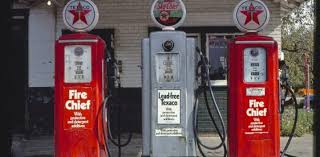
The world runs on petroleum. Imagine a post-apocalyptic period when the local gas station is closed, and has been for two years. How will you carry out your daily activities? Generate electricity? Pump water? Plow your garden, or fields? All of these can be done by hand, and have been for thousands of years. Modern life has given us tools to help with these chores, and we can store the tools, and the food for them, for quite awhile. Gasoline, diesel fuel, jet fuel, kerosene, Coleman® fuel, and other petroleum products – all can be stored.
For long term survival purposes, only one vehicle fuel is worth talking about: Diesel.
Why pick diesel fuel? Simply, because it stores so much better than gasoline. It offers better mileage in similar vehicles than gasoline would (so you get more bang for the storage volume).
Diesel engines are inherently more reliable and getting 200,000 miles or more from a diesel engine isn't at all unusual. For example: our daily driver car is a 1982 Mercedes 300D Turbo, that has almost 400,000 miles on it. The only maintenance the engine has gotten (besides fuel and oil filters) is cleaning the fuel injectors (a simple, DIY job) and the injector pump has been rebuilt and timed. The transmission did have to be rebuilt at around 300,000 miles, I'm not sure why.
Diesel fuel is also far safer to store than gasoline is. It rarely forms explosive vapors like gasoline will, and it has a knack of finding any pinhole or loose fitting to leak out of, so you can find the leaks and stop them before they get bad.
It is also possible to make your own diesel fuel from waste cooking oil (like from a restaurant), or oil from crops like soybeans, that you might be able to grow yourself. The process of making biodiesel isn't hard, you just need some equipment and inexpensive chemicals on hand.
For those who live in areas where homes are still heated with heating oil, you can use that (or farm [untaxed, dyed, off-road] diesel) in your vehicles in an emergency. Don't use it in a road vehicle until it is an emergency, or you can get into tax troubles. If you're planning on scavenging for heating oil, a 12 VDC electric pump, with a good filter (like another diesel engine fuel filter) on the discharge side into your storage containers. Water and fungus will grow in poorly maintained (heating oil) tanks and gum up your engine. Filters are relatively cheap now, get them and store them.
Unfortunately, diesel engines have to be heavy, so they don't lend themselves to smaller engines like for chainsaws, or similar appliances. About the smallest sized diesel generator is 2Kva, too and it is not easily portable. So, in addition to diesel, it may be necessary to store gasoline (and maybe kerosene) as well.
Storing Fuel
Whatever kind of fuel you want to store, it's best to check and find out the local (town, county, state) laws on storing fuel. Environmental concerns these days make it hard to store legally, so it's best to find out what you can legally do before the state moves in and does an 'environmental cleanup' that you will have to pay for. These cleanups routinely exceed 5 figures in cost, and unless you specifically have insurance for it, your insurance probably won't cover it. For these reasons, storing fuel above ground is usually easier than in below-ground tanks. When I decided to get a large tank for diesel, I purchased a surplus airport refueling vehicle with a 5,000 gallon tank, rather than try and get a permit for a 5,000 gallon tank. Also, you should check with your insurance carrier to see if there are any limitations on the quantity of fuel you can store.