










Breaking News
 Israel, US Strike Gas Facilities In Iran's Isfahan, Possibly Triggering Retaliation Against Gulf
 Inside the Texas school accused of 'martyr brainwashing' for Iran...
 Is this why Trump changed his mind? All the ways Iran could retaliate for US energy strike...
 New supercool alloy could take the heat off helium-3
Top Tech News
 We Build and Test Microwave Blocking Panels - Invisible to Radar
 Man Successfully Designs mRNA Vaccine To Treat His Dog's Cancer
 Watch: Humanoid robot gets surprisingly good at tennis
 Low-cost hypersonic rocket engine takes flight for US Air Force
 Your WiFi Can See You. Here's How.
 Decentralizing Defense: A $96 Guided Rocket Just Put Precision Warfare into the Hands of the People
 Israel's Iron Beam and the laser future of missile defense
 Scientists at the Harbin University of Science and Technology have pioneered a sophisticated...
 Researchers have developed a breakthrough "molecular jackhammer" technique...
 Human trials are underway for a drug that regrows human teeth in just 4 days.



Even a 'superpower' is nowhere near as powerful as it looks
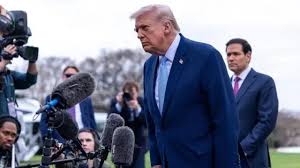
Yet again, the US-Israel war against Iran is showing that even a so-called superpower is nowhere near as powerful as it looks.
Although we will all suffer the political and economic effects of this war for many months and years to come, we humbler powers in Europe should find this renewed proof quite reassuring. With the important exception of nuclear weapons, the gap between what a superpower can achieve and what humbler, so-called "middle powers" can do is a lot smaller than it seems.
It is tempting to attribute this to the strategic incompetence that has been demonstrated by the Trump administration. Despite having had many months to plan and prepare for this war, Donald Trump and his team have been taken by surprise by the ability of the Iranian regime not just to survive but also to hit back against American military assets and Arab allies and to restrict the flow of oil out of the famously narrow Strait of Hormuz.
Yet the most shocking sign of incompetence has not been the lack of planning or the absence of clear objectives, but the failure to learn the lessons of almost every other war involving a superpower since 1945.
That lesson should have been made clear by the Vietnam war that ended in a costly American failure in 1975. It should have been made clear by Russia's disastrous invasion of Afghanistan in the 1980s and then by the equally disastrous American failures in Afghanistan and Iraq during the past 20 years, failures that Trump himself highlighted during his three election campaigns. It should also have been made clear by Russia's failure to force Ukraine into submission since its attempted invasion in February 2022.
In the modern, post-colonial era, even the greatest military power in the world cannot force a determined opponent to lay down its weapons, especially when that opponent continues to have popular support. The delusion common to Vietnam, Afghanistan, Iraq, Ukraine and now Iran has been the belief that those countries' populations would treat the superpower as a liberator.
Some people did think the outside attacker was a liberator, in all those cases, but a lot more did not, and as in Iran today many considered the superpower to be just as evil as the dictatorial regime under whose rule they previously suffered. Perhaps a point will come in Iran when the regime finally collapses, but even then neither peace nor friendly collaboration can be considered the likeliest outcomes.
There is another painful lesson from this war, and an important question will be how the United States chooses to learn from it, especially during the remaining two-and-three-quarter years of the Trump administration.