










Breaking News
 Del Bigtree: An Inconvenient Study
 President's Council of Advisors on Science and Technology
 Claims are circulating online that Larry Silverstein has opened a terrorism insurance policy...
 The Greatest Theft in Human History! The Banks and Government Are Stealing $3.5 Million...
Top Tech News
 We Build and Test Microwave Blocking Panels - Invisible to Radar
 Man Successfully Designs mRNA Vaccine To Treat His Dog's Cancer
 Watch: Humanoid robot gets surprisingly good at tennis
 Low-cost hypersonic rocket engine takes flight for US Air Force
 Your WiFi Can See You. Here's How.
 Decentralizing Defense: A $96 Guided Rocket Just Put Precision Warfare into the Hands of the People
 Israel's Iron Beam and the laser future of missile defense
 Scientists at the Harbin University of Science and Technology have pioneered a sophisticated...
 Researchers have developed a breakthrough "molecular jackhammer" technique...
 Human trials are underway for a drug that regrows human teeth in just 4 days.



Site issue halts Yara's Pilbara ag ammonia production
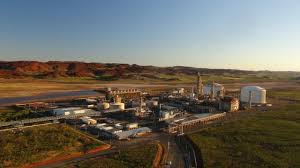
The Karratha plant produces 850,000 tonnes per annum of ammonia, a major component in the production of urea fertilisers.
These include liquid fertiliser, namely urea ammonium nitrate and anhydrous ammonia as made locally and used by some Australian growers.
In a statement from the Swedish-based parent company, Yara International said its Pilbara ammonia plant was currently not producing due to technical issues.
"The most recent assessment is that the ammonia plant might be closed for around 4-6 weeks while TAN production is expected to be able to run more or less as normal," the statement said.
TAN, or technical ammonium nitrate, is used in explosives in the mining industry.
"Impact on annual volumes will be reduced by moving forwards maintenance work originally planned for later this year."