










Breaking News
 Embattled Tulsi Gabbard in fight for survival as rivals push smear campaign to force Trump's han
 Incredible drone display recreates the Titanic departing Belfast minute-by-minute...
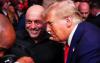 Joe Rogan launches ANOTHER blistering attack on Donald Trump for declaring war on Iran
 Haunting 911 call reveals new clue in search for missing UFO-linked Air Force general
Top Tech News
 DARPA O-Circuit program wants drones that can smell danger...
 Practical Smell-O-Vision could soon be coming to a VR headset near you
 ICYMI - RAI introduces its new prototype "Roadrunner," a 33 lb bipedal wheeled robot.
 Pulsar Fusion Ignites Plasma in Nuclear Rocket Test
 Details of the NASA Moonbase Plans Include a Fifteen Ton Lunar Rover
 THIS is the Biggest Thing Since CGI
 BACK TO THE MOON: Crewed Lunar Mission Artemis II Confirmed for Wednesday...
 The Secret Spy Tech Inside Every Credit Card
 Red light therapy boosts retinal health in early macular degeneration
 Hydrogen-powered business jet edges closer to certification


Trump turning China's yuan into world's next safe haven
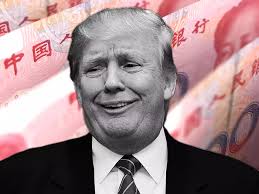
TOKYO — As US President Donald Trump's tariffs and military adventurism chip away at the dollar's credibility, the privilege may be all China's.
The reference here is to the phrase coined by France's finance minister in the 1960s, Valery Giscard d'Estaing, to criticize the dollar's dominant role in the global economy. America's "exorbitant privilege" enables it to sell 10-year US debt at 4.1% yields, even as the national debt nears US$40 trillion.
Trump's trade war, regime-change gamble in Venezuela and joining hands with Israel to attack Iran also give investors valid reasons to worry about the stability of US assets. So do Trump's attacks on the Federal Reserve, the most globally respected US institution.
It's no coincidence that foreign central banks' holdings of US Treasury securities are now the lowest since 2012. The amount of Treasuries held in custody for overseas institutions at the New York Fed was $2.7 trillion.
To be sure, some of the roughly $82 billion in sales since late February reflect governments freeing up cash to shore up national currencies and support flagging growth.
But the move away from dollar assets also reflects dwindling trust in the US government and its institutions. And China, it seems, is stepping up to assume the safe-haven role.
Along with 5% economic growth, notes Yu Lifeng, research director at Orient Golden Credit Rating, China is less at risk from the effects of surging oil prices.
That's because Beijing has massive strategic oil reserves and ready access to cheap Russian oil and natural gas, not to mention long-standing ties with Iran that allow its ships to pass through the blocked Strait of Hormuz. It's an advantage that neither Japan nor South Korea nor most Southeast Asian economies enjoy.
"In the face of frequent geopolitical risks, the safe-haven role of RMB bonds has emerged," Yu says, noting that 10 years of yuan internationalization is starting to pay off in 2026.
Risks abound, of course. The glacial pace at which Chinese leader Xi Jinping is making the yuan fully convertible, increasing financial transparency and letting the People's Bank of China make its own policy decisions is limiting the potential of mainland assets.
Meanwhile, the underlying financial system remains too fragile for investor comfort. China's property crisis has now entered its fourth year, keeping a lid on consumer spending. Deflation also remains a clear and present danger to China's trajectory.
Yet China has a literal trump card. The ways in which Trump World is taking a wrecking ball to US institutions risk forfeiting Washington's exorbitant privilege altogether.
His assaults on the Fed, Congress, the judiciary, the press and the economics community, not to mention a wildly unpredictable and destructive foreign policy, are not doing the dollar or US government debt any favors.