










Breaking News
 Rising Prices and Falling Values--Inflation and Social Decay
 The non-Zionist Israeli Population Could Save the Day
 AfD Launches 'Knife App' As Berlin Violence Surges
 Oil Prices EXPLODE After Trump Signals That US Is Moving To Wartime Economy
Top Tech News
 DARPA O-Circuit program wants drones that can smell danger...
 Practical Smell-O-Vision could soon be coming to a VR headset near you
 ICYMI - RAI introduces its new prototype "Roadrunner," a 33 lb bipedal wheeled robot.
 Pulsar Fusion Ignites Plasma in Nuclear Rocket Test
 Details of the NASA Moonbase Plans Include a Fifteen Ton Lunar Rover
 THIS is the Biggest Thing Since CGI
 BACK TO THE MOON: Crewed Lunar Mission Artemis II Confirmed for Wednesday...
 The Secret Spy Tech Inside Every Credit Card
 Red light therapy boosts retinal health in early macular degeneration
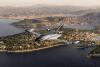 Hydrogen-powered business jet edges closer to certification


Trump's Morgenthau Plan for Iran

In what appears to be part of that plan, U.S. forces have just bombed the largest bridge in Tehran, which was newly built and connected Tehran and the city of Karaj. The U.S. bombing of the bridge reportedly killed eight people and injured 95 others. According to an article in the Guardian, Trump announced on his Truth Media website that there would be "much more to follow" if Iranian leaders failed to enter into a settlement of the war, including, of course, a reopening of the Strait of Hormuz.
Trump's vow to bomb Iran "back to the stone ages" brings to mind the infamous Morgenthau Plan for Germany after World War II. The plan, which was proposed by U.S. Secretary of the Treasury Henry Morgenthau, called for the removal or destruction of all industrial plants and equipment in the Ruhr part of Germany.
Morgenthau proposed his plan in 1944, in anticipation of Nazi Germany's surrender. The plan was detailed in a written memorandum entitled "Suggested Post-Surrender Program for Germany." If it had been adopted, it would have converted Germany into a pastoral country — that is, one that would have been entirely based on farming and ranching and forcibly devoid of any industry or manufacturing.
But the Morgenthau Plan wasn't adopted. That's because opponents of the plan pointed out that it would result in the deaths of million of German citizens, primarily from starvation and also from illness. They pointed out that if Germany was forcibly converted to a pastoral country, it would lack the economic base to support the entire German populace.
In other words, the Morgenthau Plan would have essentially constituted a form of legalized murder, which is what caused many Americans, including some U.S. officials, to oppose it. Opponents argued that targeting the German populace with death and suffering, especially out of sense of vengeance for what their government had done, would be the epitome of evil and immorality. They said that that was not what America was all about.
Opponents of the Morgenthau Plan also reminded people of what had happened after U.S. interventionism in World War I had produced victory over Germany, which was followed by the extremely harsh terms imposed on Germany by the Treaty of Versailles. Nazi leader Adolf Hitler later used those harsh terms in his rise to power, which then led to World War II and the Holocaust.
Thus, opponents argued that doing the same thing to the German people after World War II would only instill another deep sense of rage and anger that would inevitably lead to another world war down the road. Instead, they argued, after Germany's surrender, the United States and the Allied Powers should do their best to put the war behind them and help restore, not destroy, Germany.