










Breaking News
 Hunter Biden Challenges Don Jr. and Eric Trump to a Cage Fight (VIDEO)
 Minneapolis Pushes To Legalize Sex Bath-Houses For Gay Somali Immigrants
 Pentagon Seeks Stunning 243x Budget Surge For Drone Warfare Unit As Eurasian Wars...
 'World's First' Humanoid Robot For Real Household Chores Launched With 16-Hour Battery
Top Tech News
 Anthropic says its latest AI model is too powerful for public release and that it broke...
 The CIA used a futuristic new tool called "Ghost Murmur" to find and rescue...
 This Plant Replaces All Fertilizer FOREVER. Why Did the FDA Ban It?
 China Introduces Pistol-Like Coil-Gun Based On Electromagnetic-Launch Systems
 NEXT STOP: MARS IN JUST 30 DAYS?!
 Poland's researchers discovered a bacteria strain that destroys pancreatic cancer.
 Intel Partners with Tesla and SpaceX on Terafab
 Anthropic Number One AI in Ranking and Revenue - Making $30 Billion Per Year
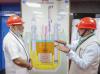 India's indigenous fast breeder reactor achieves critical stage: PM Modi
 Mexico Speeds Up Biometric ID Rollout


When the Shelves Go Silent
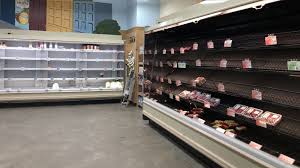
In the current global climate, discussions surrounding food security are often framed in reassuring, technical language—phrases like "temporary disruption," "market correction," or "supply chain adjustment" dominate public discourse. Yet, beneath this carefully moderated vocabulary, a more unsettling reality is taking shape. The global food system, long perceived as stable and self-correcting, is increasingly revealing structural weaknesses that challenge this assumption. What appears, at first glance, to be a series of isolated disruptions may in fact represent the early stages of a broader and more systemic instability.
The paradox at the center of this issue is difficult to ignore: global agricultural production remains, in aggregate terms, sufficient to meet human consumption needs, and yet food insecurity continues to expand. This contradiction suggests that the problem is not simply one of quantity, but of distribution, access, and systemic design. Food exists, but it does not flow evenly. It accumulates in some regions while disappearing in others, not because of natural scarcity alone, but because of economic, political, and logistical constraints that distort the movement of essential resources.
In recent years, several converging forces have intensified this imbalance. Climate variability has disrupted traditional agricultural cycles, introducing unpredictability into planting and harvesting seasons. Regions once considered reliable producers are experiencing declining yields due to drought, soil degradation, or extreme weather events. At the same time, the cost of agricultural inputs—particularly energy and fertilizers—has risen sharply, placing additional strain on producers. Farmers, faced with shrinking margins and uncertain outcomes, are increasingly forced to make conservative decisions, often reducing input use or scaling back production altogether.
This shift is subtle but significant. Agricultural output is not determined solely at the moment of harvest, but months in advance, during the planning and planting phases. When uncertainty dominates these decisions, the consequences are delayed but inevitable. What is not planted today will not exist tomorrow. This temporal disconnect between cause and effect contributes to the illusion of stability, allowing systems to appear functional even as the conditions for future disruption accumulate.
Compounding these pressures are geopolitical tensions that affect trade flows and resource availability. Modern food systems are deeply interconnected, relying on complex networks that span continents. A disruption in one region—whether due to conflict, sanctions, or policy shifts—can reverberate globally. Export restrictions, in particular, have historically played a critical role in amplifying food crises, as countries prioritize domestic supply at the expense of international markets. While such decisions may be rational from a national perspective, they collectively reduce the resilience of the global system.