










Breaking News
 Did You Notice How Climate Alarmism Just Stopped?
 'They're going to come for me': Ex-FBI deputy director reveals he's 'living in f
 Trump Pulling 5,000 US Troops From Germany In Punitive Move Amid Merz Spat
 A Robot Economy: Who Gets Rich, Who Gets Left Behind
Top Tech News
 Robot Dives 1.5 Miles, Maps French Shipwreck With 86,000 Images And Recovers Artifacts
 Brain-inspired chip could reduce AI energy use by 70%
 CANCER HAS BEEN CURED
 "This is the first synthetic species," microbiologist J. Craig Venter told 60 Minutes'
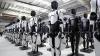 Humanoid robots are hitting the factories at an increasing pace
 Microsoft's $400 Billion Mistake Is Now a $200 Phone With Zero Tracking
 Turn Sand to Stone With Vinegar. Stronger Than Steel. Hidden Since 1627
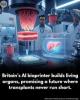 This is a bioprinter printing with living human cells in real time
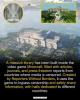 The remarkable initiative is called The Uncensored Library,...
 Researcher wins 1 bitcoin bounty for 'largest quantum attack' on underlying tech



Watch: He's Getting Junk Food Out Of Military Bases -- And Says We Can Do The Same In Schools...
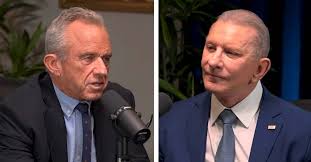
Chef Robert Irvine and U.S. Health Secretary Robert F. Kennedy Jr. said poor-quality meals in schools, hospitals, prisons and military bases are fueling chronic disease. Irvine argued that improving food doesn't require spending more money. "Look, we can do this. It's not about money," he said on the debut of "The Secretary Kennedy Podcast."
by Jill Erzen
We're making millions of Americans who eat in schools, hospitals, prisons and on military bases "sick with the food we serve them," chef Robert Irvine said on the first episode of "The Secretary Kennedy Podcast."
U.S. Health Secretary Robert F. Kennedy Jr. debuted the podcast on April 15 with a challenge for Irvine: transform America's food system without raising costs.
"Look, we can do this. It's not about money," Irvine said.
Kennedy framed the issue as a national public health priority rooted in everyday institutional meals, pointing to schools as the central battleground.
"Our gold standard objective, the holy grail of this, is to get … good food into our schools," Kennedy said, citing shuttered cafeterias and the rise of packaged meals as "one of the big impediments."
Irvine, who began his career cooking in the British Royal Navy and now works with U.S. military food programs, said the problem starts with how institutions buy and prepare food — not how much they spend.
"We need to buy correctly," he said. "We need to look at what we're purchasing, where it's coming from, the farmer, what the excess product is."
He tied food quality directly to performance and well-being, especially for children.
"Happy kids go to school and become brighter people. … That's just science," Irvine said. "They're happier. They learn more. They don't fall asleep at 10 o'clock in the morning because they've had a Coke and a Snickers bar."
'You order it, I cook it, you eat it … that's how we should be doing this'