










Breaking News
 Did You Notice How Climate Alarmism Just Stopped?
 'They're going to come for me': Ex-FBI deputy director reveals he's 'living in f
 Trump Pulling 5,000 US Troops From Germany In Punitive Move Amid Merz Spat
 A Robot Economy: Who Gets Rich, Who Gets Left Behind
Top Tech News
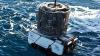 Robot Dives 1.5 Miles, Maps French Shipwreck With 86,000 Images And Recovers Artifacts
 Brain-inspired chip could reduce AI energy use by 70%
 CANCER HAS BEEN CURED
 "This is the first synthetic species," microbiologist J. Craig Venter told 60 Minutes'
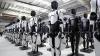 Humanoid robots are hitting the factories at an increasing pace
 Microsoft's $400 Billion Mistake Is Now a $200 Phone With Zero Tracking
 Turn Sand to Stone With Vinegar. Stronger Than Steel. Hidden Since 1627
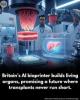 This is a bioprinter printing with living human cells in real time
 The remarkable initiative is called The Uncensored Library,...
 Researcher wins 1 bitcoin bounty for 'largest quantum attack' on underlying tech



Donroe Doctrine is becoming everything China feared
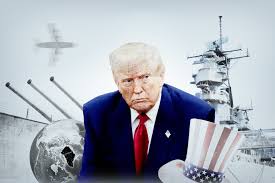
On April 28, the State Department issued a joint statement "in solidarity with Panama" in response to an uptick in detentions of Panama-flagged vessels at Chinese ports, which it characterized as "a blatant attempt to politicize maritime trade."
This comes on the heels of a targeted lawfare campaign by American and Panamanian officials to dispossess Chinese logistics infrastructure at the Balboa and Cristobal terminals, and within a broader maritime context that has seen the US blockade the Strait of Hormuz, enter a defense partnership with Indonesia and put out aggressive statements about Peru's Port of Chancay.
The co-signatories on the statement include Costa Rica, Bolivia (more on that later), Paraguay, Guyana, and Trinidad and Tobago.
It's difficult to overstate the irony of this about-face on Panama. Just months ago, the US was pursuing a two-pronged strategy of diplomatic coercion via bilateral security dialogues and lawfare through a highly politicized audit of Chinese concessions near the Panama Canal.
This culminated in an utterly predictable Panamanian Supreme Court ruling against port operator CK Hutchinson, resulting in its eviction and replacement with a subsidiary of the Danish logistics firm Maersk.
Recall that the Trump administration's opening position in these negotiations was threatening to retake the Panama Canal by force, and the State Department's lofty rhetoric about defending Panama's "sovereignty" and rejecting "politicization" starts to ring hollow.
The co-signatories joining the US in this declaration of "freedom" may seem random; however, they map perfectly onto America's long-term economic and security priorities in the region.
Guyana is the world's breakout producer of sweet light crude and is benefiting from new investments downstream amid America's blockading of the Persian Gulf, while Trinidad is a major producer of petrochemicals like urea and ammonia.
Costa Rica is a reliable American ally that operates the most technologically advanced port in the Caribbean, and Paraguay is likely in the mix as the only remaining South American country that recognizes Taiwan.
But perhaps the most interesting co-signatory is Bolivia, a landlocked Andean nation that seems irrelevant to defending maritime "security" in the Caribbean – until one considers America's long-term energy goals.
Bolivia sits on top of the world's largest lithium reserves, but the high magnesium-to-lithium ratio in its source brine requires capital-intensive (and largely experimental) processes for extraction.
There is also the logistical challenge of moving thousands of tons of lithium across hundreds of kilometers of rough terrain to Chilean ports on the Pacific and, finally, up through the Panama Canal.
To put it lightly, these factors put a massive premium on every ton of lithium bound for export to manufacture electric vehicle (EV) batteries and grid-scale energy storage systems. Bolivian President Rodrigo Paz is clearly aware of this.
His recent decision to replace the head of the state-owned lithium company, Yacimientos de Litio Bolivianos, signals that he is willing to break off deals made with China and Russia under Bolivia's previous socialist government, provided that Western capital can offer a guaranteed market.