










Breaking News
 The U.S. Empire's Motivations in the Ukraine War
 Contrived Wars and No Peace
 Polish Prime Minister Tusk Says NATO Alliance Faces 'Disintegration' Amid U.S. Troop Reducti
 Trump Will Make Europe (Especially Germany) Grateful Again
Top Tech News
 Robot Dives 1.5 Miles, Maps French Shipwreck With 86,000 Images And Recovers Artifacts
 Brain-inspired chip could reduce AI energy use by 70%
 CANCER HAS BEEN CURED
 "This is the first synthetic species," microbiologist J. Craig Venter told 60 Minutes'
 Humanoid robots are hitting the factories at an increasing pace
 Microsoft's $400 Billion Mistake Is Now a $200 Phone With Zero Tracking
 Turn Sand to Stone With Vinegar. Stronger Than Steel. Hidden Since 1627
 This is a bioprinter printing with living human cells in real time
 The remarkable initiative is called The Uncensored Library,...
 Researcher wins 1 bitcoin bounty for 'largest quantum attack' on underlying tech



Pirates Of The Arabian
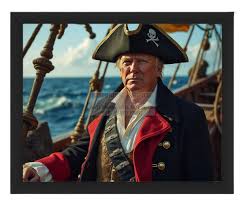
President Trump's remarks were, once again, strikingly blunt and unfiltered, to the point of sounding almost satirical. Yet the irony is real. The US president was openly acknowledging that American naval power in the Arabian Sea is now being used in ways that mirror the practices it was once built to suppress.
Negotiating with pirates is difficult. While this weekend's headlines finally hint at diplomacy between the US and Iran, the gap between their positions appears wider than the Strait itself. Iran continues to cling to maximalist demands, while the US rejects them as unacceptable. For now, no credible outlines of a deal have emerged.
In the meantime, Washington is trying a different tactic. The US is encouraging neutral commercial vessels to run the blockade, putting Iran's threats to the test. It has offered to help guide stranded ships through the Strait by sharing information on safer transit routes (e.g. no mines) and, potentially, insurance support. Although US navy vessels may operate nearby, this falls short of formal military escorts, which would likely violate the ceasefire. Even so, the approach carries obvious risks, as it could still result in exchanges of fire with Iranian ships, which might then lead to further escalation.
From Washington's perspective, that risk is not entirely unwelcome. Any Iranian attack on neutral shipping would strengthen the US public?relations case and might make it a bit easier to assemble the international coalition that has so far proven elusive.
If some energy does flow out of Hormuz, it will kick the can down further down the road. The deeper problem remains that both sides believe they have won. Washington points to the destruction of much of Iran's navy and air force, its missile?launching capacity, and large parts of its military and industrial base. Tehran draws a different conclusion. It has survived a campaign widely seen as aiming at regime collapse, it has demonstrated its ability to strike across the Gulf and into Israel, and it has shown it can place the global economy in a chokehold.
Even as its own economy suffers from the US blockade, Tehran appears convinced it can outlast the US economically and politically, especially as Trump moves closer to the midterm elections. At present neither side holds a strong card, yet both believe time is on its side. That might look like a manageable situation were it not for oil markets losing roughly 10 million barrels a day, with inventories now running uncomfortably low.