










Breaking News
 WATCH LIVE: Pentagon Launches Doomsday Plan "FORTRESS" To Keep America Fighting...
 New AI-run super PAC aims to decide the U.S. Senate by backing third-party candidates...
 Apex Recordhunter electric drone sets unofficial speed record
 Space-age manna: USAF & SpaceX drop survival kit from orbit
Top Tech News
 Modular phone promises total privacy at the flick of a switch
 Genetically Engineered War Dogs for 134 Pound Cyborg Dire Wolves Now – Later 600 Pound Wolves
 They're Quietly REPLACING Our Food With THIS… And Nobody Is Talking About It!
 Chicago Opens First "Teacher-Free" AI School as Global Push Accelerates
 Solar Panels Are Doing Something Nobody Expected
 DeLorean climbs skyward to race electric flying cars
 Atari's 800XL returns with a keyboard, cartridges and BASIC
 Bioinspired robot airdrops into remote waters via morphing wing-sail
 Anduril interceptor adapts to emerging threats via swappable stages
 I Built a Website to Expose Solar and Battery Scams


Water in Disasters: A Rain Catchment and Treatment System, by Suburban Prepper
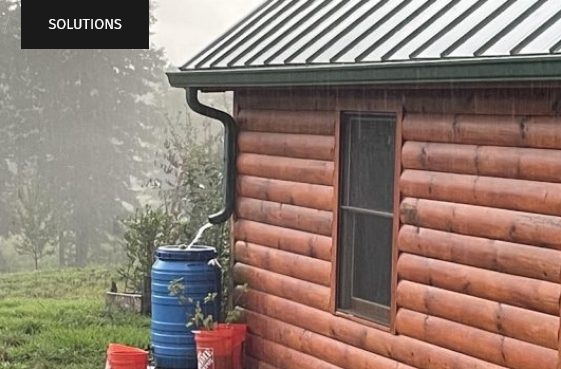
I live in the suburbs and while I have my beans, bullets and band aids pretty squared away, water has always been an area of concern for me. There is no way to store enough water for a long term outage, and I haven't found many good options. Recently I have spent more time thinking about this and testing possible options. This article is the result of that.
Water Needs
People need around 1 gallon per person per day just for drinking. For a family of 5, that is 5 gallons per day or 150 gallons per month. At 8 pounds per gallon, that is 1200 pounds of water for the bare minimum for just one month. A year's supply would be nearly 2000 gallons and 7 tons of water. And that is just the minimum for drinking. Water is also important for sanitation, cooking, flushing toilets, watering gardens, fire fighting and many other things. In our modern world, with water available at the turn of a tap, the average American uses from 60-80 gallons per person per day. In a SHTF situation, we would need to be careful with our water use and try to limit the waste but the true need is likely many times the 1 gallon per day commonly quoted. Realistically, 5-10 gallons per person per day is probably closer to what you need. At 5 gallons per day for a family of 5, that is 9,125 gallons per year or 73,000 pounds. From a storage perspective, this is 1,220 cubic feet of water. That is a cube 12 ft by 12 ft and 8 ft high. That would completely fill a medium sized room from floor to ceiling. Obviously, this is more than the average suburban homeowner can store.