










Breaking News
 Americans Are Officially Out Of Money To Spend -- We Had To React
 Arizona reports several cyclosporiasis cases: What to know | FOX 10 Phoenix
 South Korea's AI Bubble Just Popped
 It's Not Just a New Jersey Scandal – SIX States Were Previously Caught Including THOUSANDS...
Top Tech News
 Anthropic is launching its own drug discovery programs for rare diseases using Claude...
 SpaceX AI Satellites Will Have 250 Kilowatts of Power
 Chinese researchers have developed a sodium-metal battery that can fully charge in just 4 minutes...
 SpaceX Starship Flight 13 in 3 Days - Thursday July 13
 Chinese Scientists Develop Nuclear Battery Using Carbon-14
 Teleoperated humanoid robots complete first-ever live surgery
 Floating capsule auto-disinfects water without chemicals or battery
 Modular Reactors To Solve Data Center Hysteria?
 DeepSeek Developing In-House AI Chip In Bid To Cut Nvidia Reliance
 America just took three brand-new nuclear reactors critical in thirty days, a first for any...



Ehang 184 drone could carry you away one day
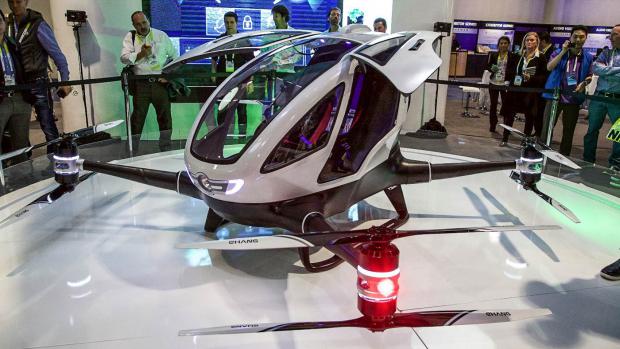
Almost all of them have one thing in common, however: people can't ride in them. We say "almost all," as there is one exception. Ehang's 184 AAV (Autonomous Aerial Vehicle) is designed to carry a single human passenger, autonomously flying them from one location to another.
Ehang CEO Huazhi Hu began designing the one-seater electric drone a couple of years ago, after two of his pilot friends were killed in plane crashes. He decided that people needed a form of short-to-medium-distance personal air transport that didn't require them to have a pilot's license, and that took much of the danger out of low-altitude flight.
The idea behind the Chinese-built 184 is that users will simply get in, power it up, select their destination using a 12-inch touchscreen tablet display, then press the "take-off" button.