










Breaking News
 Researchers Turn Car Battery Acid and Plastic Waste into Clean Hydrogen and New Plastic
 Stop Guessing: When to Pressure Can vs. Water Bath Can
 What Do Authoritarians Fear Most? People Who Stick Up for Each Other.
 12V 460Ah Epoch "V2-T" Marine Rated Battery! Holy Cow..
Top Tech News
 The Most Dangerous Race on Earth Isn't Nuclear - It's Quantum.
 This Plasma Stove Cooks Hotter Than The Sun
 Energy storage breakthrough traps sunlight in a molecule
 Steel rebar may have met its match – in the form of wavy plastic
 Video: Semicircular wings give Cyclone VTOL a different kind of lift
 After 20 Years, Wave Energy Finally Works
 FCC Set To "Supercharge" Starlink Space Internet With "Seven-Fold More Capacity"
 'World's First' Humanoid Robot For Real Household Chores Launched With 16-Hour Battery
 XAI Training 10 Trillion Parameter Model – Likely Out in Mid 2026
 The $7 Powder That Beats Your $5,000 AC Unit!



Researchers Turn Car Battery Acid and Plastic Waste into Clean Hydrogen and New Plastic
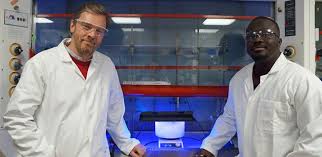
The process then converts the waste into clean hydrogen fuel and valuable industrial chemicals.
The reactor was developed by researchers from the University of Cambridge and powered powered by the energy from the Sun, making it a potentially cheaper, more sustainable alternative to current chemical-based recycling methods.
The team say their method could create a circular system where one waste stream solves another. Their results are reported in the journal Joule.
Global plastic production exceeds 400 million tonnes per year, yet only 18% is recycled, Cambridge state in a press release on the discovery. The rest is burned, landfilled, or escapes into ecosystems. The researchers say that their method, known as acid photoreforming, could help address the global mountain of plastic waste.
In an "almost accidental" discovery, the photocatalyst they invented turned out to be robust enough to withstand the highly corrosive effects of acid, opening a world of possibilities in the process including the chance to make productive use of the acid inside spent car batteries, which is normally neutralized and discarded.
"The discovery was almost accidental," said Professor Erwin Reisner from Cambridge's Yusuf Hamied Department of Chemistry, who led the research. "We used to think acid was completely off limits in these solar-powered systems, because it would simply dissolve everything. But our catalyst developed didn't—and suddenly a whole new world of reactions opened up."
"Acids have long been used to break plastics apart, but we never had a cheap and scalable photocatalyst that could withstand them," said lead author Kay Kwarteng, a PhD candidate in Reisner's research group, who developed the photocatalyst. "Once we solved that problem, the advantages of this type of system became obvious."
The method developed by Kwarteng, Reisner and their colleagues, first treats waste plastics with the car battery waste acid, breaking the long polymer chains into chemical building blocks such as ethylene glycol, which the photocatalyst then converts into hydrogen and acetic acid (the main ingredient in vinegar) when exposed to sunlight.