










Breaking News
 Americans Are Officially Out Of Money To Spend -- We Had To React
 Arizona reports several cyclosporiasis cases: What to know | FOX 10 Phoenix
 South Korea's AI Bubble Just Popped
 It's Not Just a New Jersey Scandal – SIX States Were Previously Caught Including THOUSANDS...
Top Tech News
 Anthropic is launching its own drug discovery programs for rare diseases using Claude...
 SpaceX AI Satellites Will Have 250 Kilowatts of Power
 Chinese researchers have developed a sodium-metal battery that can fully charge in just 4 minutes...
 SpaceX Starship Flight 13 in 3 Days - Thursday July 13
 Chinese Scientists Develop Nuclear Battery Using Carbon-14
 Teleoperated humanoid robots complete first-ever live surgery
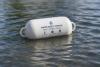 Floating capsule auto-disinfects water without chemicals or battery
 Modular Reactors To Solve Data Center Hysteria?
 DeepSeek Developing In-House AI Chip In Bid To Cut Nvidia Reliance
 America just took three brand-new nuclear reactors critical in thirty days, a first for any...



3D-Printed Ceramics Could Build Next-Gen Spaceships
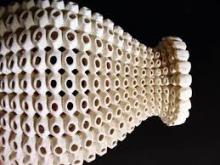
Heat-shielding tiles on the space shuttle were made from ceramics, for example.
Now researchers have used a 3D printer to make customized ceramic parts that have also overcome the Achilles' heel of ceramic objects: their tendency to crack.
The finding could open the door to a new class of ceramic-body or ceramic-engine jets, perhaps even a hypersonic craft that can fly from New York to Tokyo in a few hours.
"If you go very fast, about 10 times speed of sound within the atmosphere, then any vehicle will heat up tremendously because of air friction," said Tobias Schaedler, senior scientist at HRL Laboratories in Malibu, Calif. "People want to build hypersonic vehicles and you need ceramics for the whole shell of the vehicle."
Schaedler and colleagues at HRL invented a resin formulation that can be 3-D printed into parts of virtually any shape and size.